
Clogged milk ducts can appear suddenly — one feed feels fine, and the next you’re dealing with a painful, firm spot in your breast that makes every latch uncomfortable 💛. The soreness can be sharp and localised, and when you’re already juggling feeds, fatigue, and daily life, it can feel especially overwhelming.
The encouraging news is that with the right gentle approach, breast massage for clogged ducts can help soften swollen tissue, ease tenderness, and restore smoother, more comfortable milk flow. Below, you’ll find an evidence-based guide combining updated lactation science with practical, nurturing steps you can use at home 🌿.
Table of Contents
What Is a Clogged Milk Duct?
A clogged or “plugged” duct happens when milk isn’t draining fully from part of the breast. Instead of flowing freely, milk becomes trapped behind inflamed tissue 🌿 — this inflammation is usually the real source of pain.
Clogged ducts often form after long gaps between feeds, shallow latching, tight bras, pressure on the breast while sleeping, oversupply, or missed pumping sessions. You may notice:
- A firm, tender lump
- Localised warmth
- Mild redness
- Temporary reduction in milk flow
- Pain during let-down
These usually improve after feeding. If fever or flu-like symptoms appear, you may be moving toward mastitis and should seek care.

Why Gentle Massage Helps 🕊️
Soft, intentional touch can:
- Support lymphatic drainage 💧
- Reduce inflammation
- Soften the breast and ease tenderness
- Encourage smoother milk flow
- Help milk move past swollen ducts
The Cleveland Clinic notes that deep pressure or “digging” into a clog can worsen swelling, so modern recommendations emphasise gentle, lymphatic-style techniques.
How Breast Massage for Clogged Ducts Works
A clogged duct isn’t a solid plug you need to break up — it’s milk trapped behind swollen tissue. Gentle massage reduces that swelling so milk can move again. Combined with frequent feeding or pumping, this approach helps many parents find relief within a day. 🍼
How to Prepare
Before massaging:
- Use warmth (shower or warm compress)
- Wash your hands
- Loosen any restrictive clothing
- Relax your shoulders and chest with slow breaths 🕊️
Warm tissue responds better to gentle massage, making the technique both more comfortable and more effective.
How to Do a Breast Massage for Clogged Ducts (Gentle Method)
1. Begin With Featherlight Lymphatic Strokes
Place your fingertips above your collarbone and sweep downward using extremely light pressure — almost like brushing over the skin. Repeat several times, then make similar light sweeps from your underarm toward your collarbone. These strokes open the lymph pathways and help reduce swelling.
2. Use Soft Sweeping Motions Across the Breast
With flat fingers, gently sweep across the breast toward the armpit or collarbone. Keep the pressure light and smooth. These strokes help shift swelling away from the clogged area and ease tension.
3. Soften With Reverse Pressure Softening (RPS)
If the area around your nipple feels firm, Reverse Pressure Softening can help. Place your fingertips around the areola and gently press inward toward the chest wall for about a minute. This softens the areola, making it easier for milk to move during feeding.
4. Gently Support Tender Spots
If you feel a firm area, use gentle circular motions around the lump, guiding fluid toward the lymphatic system or nipple. Avoid deep pressure — tenderness should ease, not intensify.
5. Feed or Pump Soon After
Massage should always be followed by milk removal. Feeding your baby first on the affected side or pumping at a comfortable suction level helps milk move through softened tissue.
6. Apply a Cool Compress
After feeding or pumping, use a cool compress for 10–15 minutes to calm inflammation and relieve lingering discomfort ❄️.
Aim to repeat this routine two to three times a day. Each massage should take about five to seven minutes total.
Blocked Duct vs. Mastitis
A clogged duct tends to be localised and improves after feeding. Mastitis brings spreading redness, significant heat, fever, and flu-like symptoms. If you feel suddenly unwell or pain escalates quickly, contact a healthcare professional.
Why Gentle Techniques Are Best 🩷
Deep massage can damage delicate breast tissue and worsen swelling. Light, rhythmic strokes help reduce inflammation, stimulate lymphatic flow, and protect your milk ducts. This approach is far more effective — and safer — than older “firm pressure” methods.
⚠️ When Massage Alone May Not Help
If your clog persists beyond 48 hours, repeatedly returns, or becomes more painful, the root cause may be:
- Oversupply
- Latch issues
- Pumping problems
- Early mastitis
A lactation consultant can help identify what’s going on and guide targeted treatment.
Frequently Asked Questions
How often should I massage a clogged duct?
Two to three gentle massage sessions per day are usually enough. Over-massaging can irritate the tissue, so focus on short, effective sessions paired with warmth before feeding and cool compresses afterward.
Should breast massage hurt when clearing a clogged duct?
No — breast massage for clogged ducts should be gentle and comfortable 💛. Sharp pain, burning, or pressure that worsens the area means the massage is too deep. Light, lymphatic-style touch works best.
How long does it take for a clogged duct to clear?
Many clogged ducts improve within 24 hours when using warmth, massage, and frequent feeding. More stubborn inflammation may take 48–72 hours. If symptoms worsen or you develop fever, seek medical care.
Do I need oil when massaging a blocked duct?
Oil isn’t required, but breastfeeding-safe oils such as jojoba or coconut can make sweeping motions smoother. Avoid essential oils directly on the breast, as they may irritate the skin or be unsafe for babies.
Should I massage before or after breastfeeding?
Massage works best before feeding or pumping because it softens the breast and encourages milk flow. After feeding, a cool compress helps reduce inflammation and tenderness ❄️.
What breastfeeding positions help with a clogged duct?
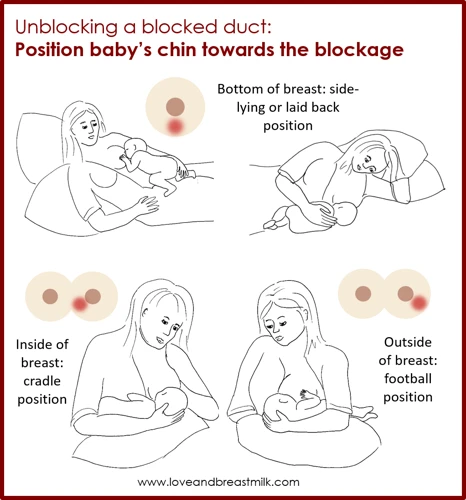
Feeding with your baby’s chin or nose facing the tender area may improve drainage. Laid-back or side-lying positions can also help reduce pressure and improve comfort 🌿.
Can I still breastfeed if I have a clogged duct?
Yes — continuing to breastfeed is safe and very helpful. Frequent milk removal is key to easing the blockage and preventing complications.
What should I do if massage doesn’t clear the clogged duct?
If gentle massage, warmth, and feeding haven’t improved the clog within 48 hours, adjust your technique, check for latch issues, reduce tight clothing, and increase rest and hydration. Persistent symptoms may require help from a lactation consultant.
Is vibrating massage safe for clogged ducts?
Very light vibration — such as the back of an electric toothbrush — can help soften tissue. However, avoid strong vibration or pressing vibrating tools into the breast, as this can worsen inflammation.
Can a clogged duct turn into mastitis?
Yes, especially if inflammation increases or the duct doesn’t improve within 1–2 days. Watch for fever, chills, spreading redness, or feeling suddenly unwell 🕊️. Early treatment can prevent complications.
🍼 Looking for More Breastfeeding Massage Techniques?
Explore our complete breastfeeding massage guide to learn gentle, expert-backed techniques for easing discomfort, improving milk flow, and supporting your breastfeeding journey.
👉 Visit the Breastfeeding Massage Hub
Conclusion
Clogged ducts can be painful and discouraging, but gentle and consistent care makes a remarkable difference. By using breast massage for clogged ducts, pairing it with warmth, Reverse Pressure Softening, cool therapy, and regular breastfeeding or pumping, you can reduce swelling and return to more comfortable feeds 💛. Relief often comes quickly, but if symptoms worsen or persist, professional support is the next best step.
🧾 Related Articles
👉 How to Massage Your Breasts for Increased Milk Production
👉 How to Massage Swollen Breasts: Gentle Relief for Tenderness and Inflammation
👉 How to Breast Massage: A Complete Beginner’s Guide for Comfort and Breast Health
📚References
- Mayo Clinic: Breast-Feeding
- Cleveland Clinic — Clogged Milk Ducts
- La Leche League International — Engorged Breasts
- Academy of Breastfeeding Medicine – The Mastitis Spectrum
⚠️ Disclaimer:
This article is for educational purposes only and does not replace medical advice. Always consult a qualified healthcare provider for concerns about breast pain, swelling, or breastfeeding issues.
About The Author