

Feel like your muscles never quite recover, no matter how much you stretch or rest? A massage gun might be the recovery tool you’ve been missing. These handheld devices deliver rapid pulses of pressure deep into muscle tissue, helping to ease soreness, improve blood flow, and speed up recovery after workouts. Whether you’re an athlete, a weekend warrior, or simply looking for relief from daily tension, using a massage gun the right way can make all the difference. In this guide, you’ll learn everything you need to know to use a massage gun safely and effectively — from proper technique and timing to common mistakes and expert tips for maximum results.
Table of Contents
What is a Massage Gun?

A massage gun, or percussive therapy device, is a handheld recovery tool that delivers rapid pulses of pressure deep into your muscle tissue. It’s designed to mimic the effects of a deep tissue massage, helping to break up knots, improve blood flow, and reduce muscle soreness.
According to the Cleveland Clinic, percussive therapy can help improve flexibility, manage soreness, and reduce delayed-onset muscle soreness (DOMS) after workouts.
Benefits of Using a Massage Gun:
Top Benefits:
- Pain Relief – Reduces tension and eases discomfort in sore areas
- Relaxation – Promotes stress relief and endorphin release
- Improved Circulation – Enhances blood flow and muscle oxygenation
- Better Mobility – Releases tight fascia and improves flexibility
- Sleep Support – Helps you unwind before bed for deeper rest
👉 Looking for the best massage gun for stress relief? Check out our top picks for 2025.
How to Use a Massage Gun (Step-by-Step)

1. Pick the right attachment:
- Ball: For general use (quads, glutes, hamstrings)
- Bullet: For deep trigger points, feet, hands
- Flat: For sensitive or post-rehab areas
- Fork: For either side of the spine (never on the bone)
2. Start on the lowest speed setting
This helps your muscles adjust and prevents shock.
3. Glide it slowly across the muscle
Don’t jab or press. Move at about 1 inch per second.
4. Spend 15–30 seconds per area
Avoid lingering too long in one spot. Max 2 minutes per muscle group.
5. Breathe and relax during use
A relaxed body improves muscle responsiveness.
6. After use:
Stretch gently, hydrate, and let your body recover.
Which Massage Gun Attachment Should You Use?
Most massage guns come with four to six heads. The names change from brand to brand, but the shapes are much the same. Here is what each one is for:
| Attachment | Best for | Take care with |
|---|---|---|
| Flat (standard) | Most muscle groups; the safest first choice | Very bony areas |
| Ball (round) | Large muscles: thighs, glutes, hamstrings, calves | Small or thin muscles |
| Soft or dampener head | Tender areas, the back of the neck and upper shoulders | Very little; it is the gentlest head |
| Bullet (cone) | A single knot, the soles of the feet | Short bursts only; never on bone or near nerves |
| Fork (U-shape) | Muscles either side of the spine | Never directly on the spine itself |
| Wedge or scraper | Broad, flat muscles such as the upper back and around the shoulder blades | Use light contact and keep it moving |
If you are not sure, start with the flat or soft head on the lowest speed, and only switch to a firmer, more targeted head once you know how that area feels. Theragun owners can follow our guide on how to change Theragun attachments.
How to Use a Massage Gun on Different Body Areas
The basic technique is the same everywhere: low speed, light contact and keep the head moving. What changes from one area to the next is the attachment, the time you spend and the spots to stay away from.
Neck and Upper Shoulders
Use the soft or flat head on the lowest setting. Work only the back of the neck and the upper trapezius, the muscle running from your neck out to the top of your shoulder, gliding from the base of the skull toward the shoulder. Keep off the front and sides of the neck, where major arteries, veins and nerves sit close to the surface, and off the bony ridge of the spine. About 30 to 60 seconds per side is plenty. Stop if you feel dizzy, tingly or get a headache. If you would rather use your hands, try our 5-minute self neck massage.
Upper and Lower Back
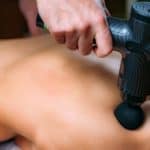
Use the fork head so it straddles the spine, or the ball head on the muscles beside it, and move slowly from the mid-back down to just above the hips. Never press on the spine or the ribs. Reaching your own back is the tricky part: hold the gun over your shoulder with a reverse grip, choose a model with an angled or triangular handle, or ask someone to help. Our guide to using a massage gun on the lower back goes into more detail.
Calves
Sit with your leg relaxed, either straight or slightly bent. Use the ball or flat head on the thick muscle at the back of the lower leg, moving from just below the knee down toward the ankle, for 60 to 90 seconds per leg. Stay off the shin bone, the back of the knee and the Achilles tendon. Skip the calf completely if it is swollen, red, warm or painful for no clear reason, because these can be signs of a blood clot and need a doctor. For stubborn tight spots, see how to massage knots out of your calves.
Thighs and Glutes
These big muscles can take the most. Use the ball head, a medium speed if it feels comfortable, and up to 2 minutes per muscle group. Work the front of the thigh, the back of the thigh, the outer hip and the glutes, but avoid the inner thigh near the groin and the bony front of the hip. For the back of the leg, our hamstring massage guide covers both hands-on and massage gun methods.
Feet and Arms
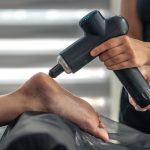
Feet and forearms have much less padding, so use the flat or soft head on low. Stay off the top of the foot and the inside of the elbow and wrist, where nerves run close to the skin. Our guide to using a massage gun on your feet walks through the sole and arch step by step.
Using a Hypervolt, Theragun or Another Brand
Everything above works for any percussion massager. The main differences between brands are the speed range, the handle shape and the attachments in the box. Hyperice Hypervolt models have a straight, compact handle, while most Theragun models have a triangular handle that makes your back easier to reach. Before your first session, check the manual for the speed settings, battery life and the maker’s list of conditions where you should not use the gun. If you are choosing a Theragun, our Theragun model comparison explains how the range differs.
Can you use a massage gun while it is charging? Plan to charge it fully first, then unplug it before your session, unless your manual says the model can run while plugged in. Use the charger that came in the box, keep the cable away from the head while the gun is running, and switch the gun off when you are not using it.
How Often and How Long Should You Use a Massage Gun?

Getting the most out of your massage gun comes down to timing, duration, and consistency. While these devices are incredibly effective for recovery and relaxation, using them too often or for too long can do more harm than good.
Here’s a breakdown of optimal usage guidelines:
- Per session: Limit your total massage time to 15 minutes or less. This helps avoid overstimulation of the nervous system and gives your body time to respond to the treatment.
- Per muscle group: Focus on each muscle for 15 to 30 seconds during warm-ups, or up to 2 minutes for deeper recovery work. Lingering too long on one spot can cause irritation or bruising, especially in smaller muscle groups.
- Per day: Most people benefit from using a massage gun once or twice a day, depending on physical activity and muscle soreness. On rest days, once is usually enough.
- Pre-workout: Use the massage gun briefly on major muscle groups (e.g., quads, hamstrings, glutes) for about 30 seconds each. This can increase blood flow and help activate the muscles before exercise.
- Post-workout: Wait 30 to 60 minutes after intense activity before using the massage gun. This gives inflammation a chance to settle and helps avoid aggravating already stressed tissue. Use slower settings to promote recovery and circulation.
Why It Matters:
Overusing a massage gun can lead to delayed soreness, tenderness, bruising, or even nerve fatigue, especially if you’re applying high pressure or using it on sensitive areas. Just like with traditional massage, more isn’t always better.
Start with shorter sessions and low speed settings, especially if you’re new to percussive therapy. Pay close attention to how your body responds — recovery tools work best when used strategically, not aggressively.
🧠 Pro Tip: Recovery isn’t a race. Use your massage gun alongside hydration, sleep, and active recovery to feel the real results.
Where Not to Use a Massage Gun

While massage guns are incredibly effective for muscle recovery and relaxation, they should never be used indiscriminately. Certain areas of the body are too delicate, vulnerable, or risky for percussive therapy — and targeting them could lead to injury or serious complications.
Here are the key zones to avoid:
❌ The Spine or Neck
Using a massage gun directly on the spine or cervical area (neck) can irritate sensitive nerves and spinal joints. The vibration may cause nerve impingement, headaches, or dizziness.
Safer alternative: Target the upper trapezius or shoulder blades, staying at least two inches away from the vertebrae.
❌ Joints or Bony Areas
Bones and joints lack the muscle padding needed to absorb vibration, which can lead to bruising or discomfort. Knees, elbows, and ankles are particularly vulnerable.
Only use around these areas, not directly on them.
❌ Varicose Veins or Inflamed Tissue
Massage guns can worsen vein damage or increase inflammation. If you have varicose veins, chronic swelling, or localized pain with heat or redness, skip that area completely.
❌ Open Wounds, Bruised Skin, or Rashes
Using a massage gun on broken or damaged skin can increase the risk of infection, delayed healing, and pain. It can also spread bacteria across the skin’s surface.
Always inspect the area first. If the skin isn’t fully intact, wait until it’s healed.
❌ Abdomen During Pregnancy
Pregnant individuals should avoid using massage guns on the abdomen, lower back, or hips unless under professional supervision. Vibrations could potentially stimulate uterine contractions or affect circulation to the baby.
When in doubt, stick to gentle manual massage and always consult your OB-GYN first.
❌ Numb, Tingling, or Injured Areas
If you experience numbness, tingling, or recent trauma (like a sprain or tear), skip the massage gun. These signs can indicate nerve involvement or acute injury, and using vibration may delay healing or mask more serious symptoms.
🧠 Pro Tip: If you’re unsure whether a specific area is safe, always ask a physical therapist, doctor, or licensed massage therapist. When used properly, massage guns are safe — but misuse can undo progress or lead to injury.
Why Does a Massage Gun Hurt Sometimes?

If your massage gun hurts instead of helps, it’s usually due to how you’re using it. Here are the most common reasons:
- 🔧 Intensity is too high – High speeds can overstimulate muscles and cause soreness or bruising, especially if you’re new to using one.
- 🔥 Used on tight or inflamed areas – Applying pressure too soon after a workout or injury can make inflammation worse.
- 🧩 Wrong attachment for the area – Bullet heads or firm tips can feel sharp on sensitive zones like calves or arms.
- ⏱️ Overuse – Long or frequent sessions can lead to muscle fatigue or nerve irritation. Keep it to 15 minutes max.
- 🚫 Pain ≠ progress – Soreness is okay, but sharp pain is a sign to stop or adjust your technique.
Massage guns should feel relieving — not painful. Start slow and listen to your body.
Using too much pressure or incorrect technique can increase the risk of unwanted massage side effects, especially in sensitive areas. ⚠️
Safety Guidelines & Precautions

✅ Do:
- Start on the lowest setting
- Test new areas gently
- Stop if you feel sharp or nerve-like pain
- Clean attachments regularly
❌ Don’t:
- Use on broken skin, bruises, or swelling
- Apply pressure directly to bones or joints
- Use while intoxicated or fatigued
- Use if you have a pacemaker (consult your doctor first)
Frequently Asked Questions
What Type of Massage Gun Should I Buy?
The best massage gun for you depends on your muscle needs, lifestyle, and budget. Here’s what to look for:
• 💪 Power & Intensity – Tight or athletic muscles? Go for a high-powered model with multiple speeds. For light recovery, a mid-range device works just fine.
• 💰 Budget – Basic models start around $50. Expect to pay $100–$200 for solid mid-tier options. Premium brands like TheraGun can reach $500+.
• ⚙️ Key Features – Look for variable speed settings, quiet motors, and multiple attachments. Some offer bonus features like heat or app control.
• ✈️ Portability – Traveling? Choose a compact, lightweight version. For home use, battery life and power matter more than size.
• ⭐ Reviews & Warranty – Check real-user reviews for noise and reliability. Stick with brands offering at least a 1-year warranty.
What is the Correct Way To Use A Massage Gun?
The correct way to use a massage gun is to start on the lowest setting and let the device glide slowly over your muscles. Don’t press down or dig into the tissue — let the vibration do the work. Use it for 15–30 seconds per muscle group during warm-up, or up to 2 minutes after workouts for recovery. Move slowly (about 1 inch per second), and avoid bones, joints, or sensitive areas like the neck or spine.
Do You Apply Pressure When Using A Massage Gun?
No — you shouldn’t apply extra pressure. The massage gun provides percussive force on its own, and pushing too hard can cause bruising, soreness, or even nerve irritation. For tight muscles, use a higher speed or switch to a more targeted head attachment, but always let the gun float across the skin without forcing it.
Do Massage Guns Work For Knots?
Yes, massage guns can help relieve muscle knots (trigger points) by increasing blood flow and relaxing surrounding tissue. Use a bullet or cone attachment at a low to medium setting and slowly circle the knot area for 15–30 seconds. However, chronic knots or deeper myofascial restrictions may still need manual therapy or treatment from a massage therapist.
Do massage guns help with cellulite?
Massage guns may temporarily improve the appearance of cellulite by boosting circulation and stimulating lymphatic drainage, which can reduce fluid retention. However, they don’t eliminate cellulite permanently. For best results, combine massage gun use with hydration, exercise, and skin-firming routines. Consistency is key, but expectations should stay realistic.
👉 Want to learn how massage guns actually affect cellulite?
Read the full guide here →
Are you supposed to flex when using a massage gun?
No — you should stay relaxed while using a massage gun. Flexing your muscles creates tension, making it harder for the percussive therapy to penetrate deep into the tissue. For maximum benefit, sit or lie in a supported position and take deep breaths to keep your muscles soft and responsive to the massage.
✅ Tip: Mid-range models often give you the best value — enough power, useful features, and durability without overspending.
✅ Next read: 👉 Struggling with stubborn muscle knots?
Here’s how to target them with a massage gun →

Final Thoughts: Make It a Ritual, Not Just a Tool
Used mindfully, a massage gun isn’t just recovery gear — it’s a wellness enhancer. Combine smart usage with stretching, hydration, and rest for maximum results. Whether you’re chasing performance or just looking to de-stress after a long day, your massage gun can be your secret weapon.
📖Explore More:
👉Best Massage Gun Under $100
👉 Compare Theragun Models
👉 How to use a Massage Gun As A Vibrator
References
- Verywellfit – Using A Massage Gun Everyday
- WebMD – Massage Gun: An Overview
- University of Utah Health – Massage Guns: How to Use Them Safely and Effectively
- CDC – About Venous Thromboembolism (Blood Clots)
⚠️ Disclaimer:
This article is for informational purposes only and does not constitute medical advice. Always consult with a licensed healthcare provider or certified massage therapist before beginning any new treatment, especially if you have pre-existing health conditions or concerns.






I appreciate your creativity and the effort you put into every post. Keep up the great work!