
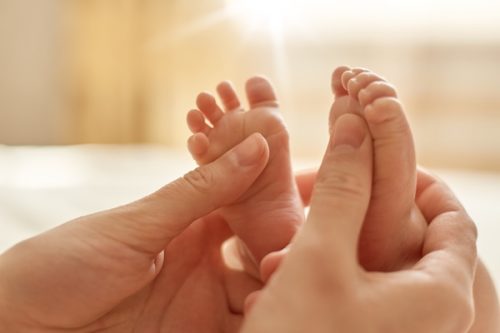
Deciding when to begin baby massage can feel confusing, especially when recommendations range from immediately after birth to several weeks later. New parents may also wonder whether they should wait for the umbilical cord to fall off, use massage oil, or avoid certain areas.
The right time depends less on a fixed age and more on your baby’s health, healing, mood, and response to touch. This guide explains when and how to begin safely.
👶 At a glance: When to Start Baby Massage After Birth
For a healthy, full-term newborn, gentle touch can begin from birth. A structured baby massage can start whenever your baby is medically well, calm, and receptive—there is no required waiting period. If your baby was premature, has a medical condition, or has broken or irritated skin, ask your pediatrician before beginning.
Table of Contents
When Can You Start Massaging a Newborn?
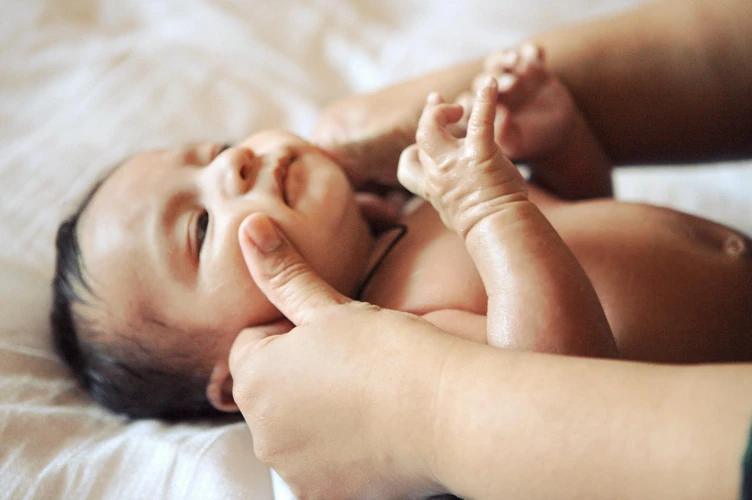
For a healthy newborn born at full term, positive touch can begin from birth. This might mean holding your baby skin-to-skin, resting a warm hand on their back, or slowly stroking their legs and feet.
A more structured massage can begin whenever:
- Your baby is medically well
- You feel comfortable handling them
- Their skin is healthy
- They are calm and receptive to touch
- You can avoid any areas that are still healing
The World Health Organization says gentle whole-body massage may be considered for healthy, full-term newborns. However, it also notes that evidence about the ideal technique, frequency, duration, and use of oils remains limited.
The government-supported Pregnancy, Birth and Baby service similarly advises that parents can start massaging a baby from birth or wait until the baby is older.
You may prefer to wait a week or two before trying a longer routine. The first days after birth can be physically and emotionally demanding, and massage should not become another task you feel obligated to complete. Cuddling, feeding, skin-to-skin contact, and responding to your baby are already meaningful forms of nurturing touch.
Do You Need to Wait for the Umbilical Cord to Fall Off?
You do not necessarily have to postpone all massage until the umbilical cord stump falls off. You can gently massage your baby’s legs, feet, arms, hands, and back while avoiding the stump and surrounding area.
Keep the stump clean and dry according to your healthcare provider’s instructions. Do not apply massage oil, lotion, or pressure to it.
Once the stump has fallen off and the belly button has healed, you can gradually include the abdomen if your baby enjoys it.
Also avoid massaging directly over:
- A healing circumcision
- Broken, blistered, or infected skin
- Rashes or inflamed eczema
- Bruises or swollen areas
- A recent vaccination site that is still tender
- Medical devices, dressings, or surgical areas
Ask your pediatrician about any area that does not appear to be healing normally.
Signs Your Baby Is Ready for Massage
The best time to start baby massage is not determined by age alone. Your baby’s behavior can tell you whether the moment is right.
A receptive baby may:
- Be awake, quiet, and alert
- Make eye contact
- Have relaxed arms, legs, and hands
- Breathe calmly
- Turn toward your voice or touch
- Seem content when you place your hands on them
Your baby may need a break if they:
- Turn their head or body away
- Stiffen or arch their back
- Pull in their arms or legs
- Clench their fists
- Become increasingly restless
- Yawn repeatedly or fall asleep
- Cry or appear distressed
- Develop unusually pale, red, or blotchy skin
A newborn does not have to tolerate a complete massage. The first session may involve only holding their foot or gently stroking one leg. Stop when your baby has had enough, even if the massage has lasted less than a minute.
What Is the Best Time to Massage a Baby?
Choose a time when your baby is calm, awake, and neither hungry nor uncomfortably full. Many parents try massage after a diaper change, between feedings, or before bedtime.
Avoid massaging immediately after feeding because movement and pressure may cause discomfort or spitting up. The American Academy of Pediatrics’ HealthyChildren.org recommends waiting at least 30 minutes after feeding for its infant colic massage routine.
There is no universally best time of day. Morning may suit an alert baby, while another baby may prefer a brief massage during their evening routine. Your baby’s mood matters more than the clock.
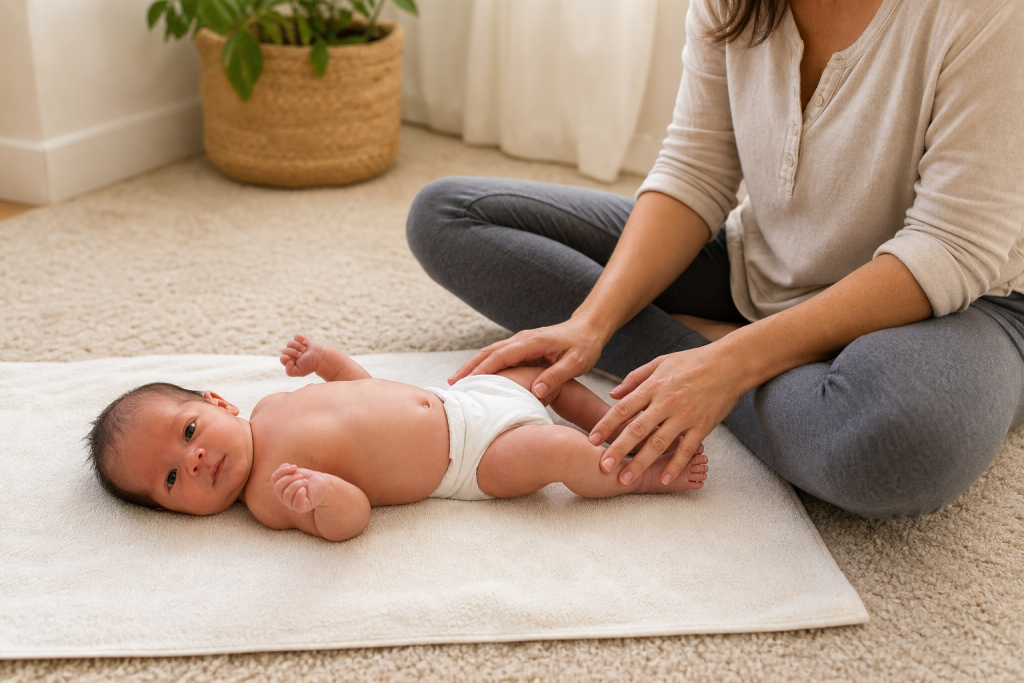
Choose a warm room without drafts because babies can become cold quickly when undressed. Place your baby on a clean towel or blanket on the floor. A floor-level surface is safer than a bed, couch, changing table, or countertop.
Keep everything you need within reach, and never leave your baby unattended.
When to Start Oil Massage for a Newborn
Oil is optional. You can massage your newborn over clothing or use clean, dry hands for short sessions.
If you want to use a product, ask your pediatrician first if your baby is very young or has sensitive skin, eczema, allergies, or a history of premature birth. Choose a simple, fragrance-free product designed for infant skin.
Before applying it more widely:
- Read the complete ingredient list.
- Apply a very small amount to one patch of intact skin.
- Monitor the area for redness, swelling, or irritation.
- Stop using the product if a reaction develops.
A patch test may identify some skin reactions, but it cannot guarantee that a product will be safe for every baby.
Avoid essential oils, adult massage products, strongly scented oils, and products containing unnecessary botanical ingredients. Nut-based oils may pose an allergy concern and are best avoided unless your pediatrician recommends one.
Olive oil is not an ideal default choice because research has raised concerns about its effect on the skin barrier, particularly in babies with sensitive or eczema-prone skin.
Do not put oil on your baby’s face or hands, which frequently go into their mouth. Oil can also make a baby slippery, so use only a small amount and keep a secure hand on your baby when repositioning them.
How to Massage a Newborn Safely
Wash and dry your hands, remove jewelry, and check that your fingernails will not scratch your baby. Warm your hands before beginning.
Then try this simple routine.
1. Ask and Pause
Tell your baby quietly that it is massage time. Rub your hands together and rest them gently on your baby’s legs. Pause to see how your baby responds.
This small ritual helps make massage a two-way interaction rather than something being done to your baby.
2. Begin With the Legs and Feet
The legs are often an easy place to start. Support one ankle and use your other hand to make slow strokes along the leg. Gently stroke the sole of the foot and each toe without pulling or forcing the joints.
3. Move to the Arms and Hands
Support your baby’s wrist and slowly stroke along the arm. Open their hand only if it relaxes naturally. Do not force clenched fingers apart.
4. Massage the Chest Gently
Rest your hands at the center of your baby’s chest and glide them outward toward the shoulders using light, symmetrical movements. Do not press on the breastbone or ribs.
5. Include the Abdomen Only When Appropriate
Avoid the abdomen until the umbilical area has healed. When it is safe to include it, use gentle clockwise circles without pressing deeply. Stop if your baby becomes uncomfortable.
Some parents use light abdominal touch when their baby appears gassy. Our guide to gentle baby gas-relief massage provides more information, but massage should not replace medical assessment when symptoms are persistent or severe.
Contact your pediatrician if your baby has repeated vomiting, a swollen or firm abdomen, feeding problems, a fever, blood in their stool, or severe or persistent crying.
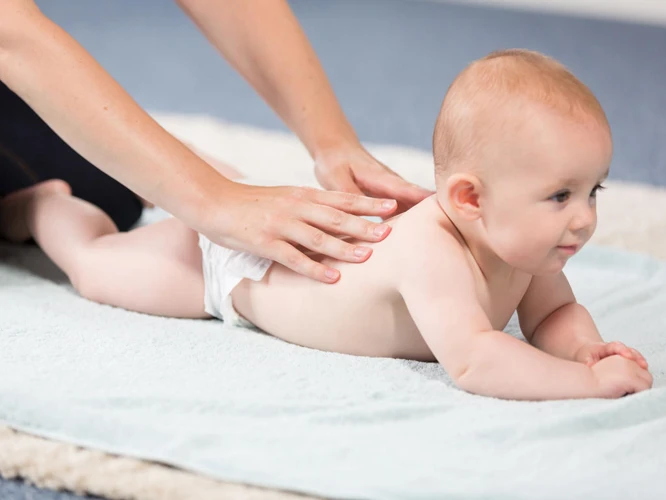
6. Massage the Back During Supervised Tummy Time
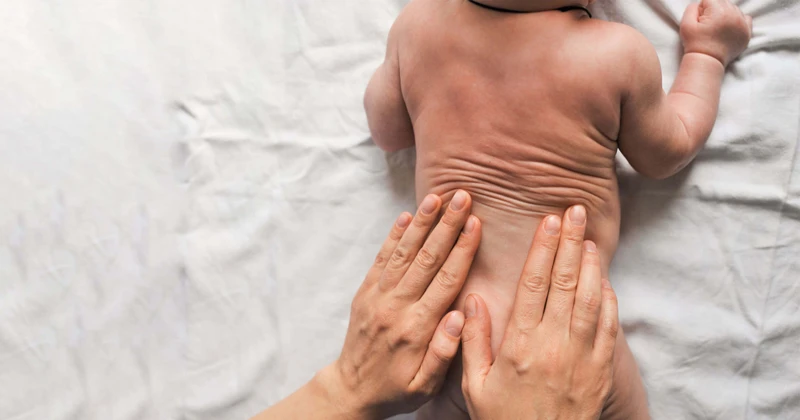
Turn your baby only when you can do so safely. While your baby is awake and supervised, use slow strokes from the shoulders toward the lower back.
Never leave a baby to sleep on their stomach after massage. Always place your baby on their back for sleep and follow current safe-sleep guidance.
Avoid deep pressure, vigorous rubbing, pulling, joint manipulation, or forceful movements. Newborn massage should consist of slow, gentle, responsive touch.

For guidance as your baby grows into an active toddler or older child, read our complete guide to pediatric massage.
How Often Should You Massage Your Baby?
There is no required schedule. You might offer massage daily, several times a week, or only occasionally.
Begin with one or two minutes and gradually increase the duration if your baby continues to enjoy it. Some babies may eventually enjoy sessions of 10 to 15 minutes, while others prefer a few brief strokes during diaper changes.
A session is not more beneficial simply because it lasts longer. A short, positive interaction is better than continuing when your baby is tired or overstimulated.
You do not have to stop baby massage at a particular age. As your baby becomes more mobile, the routine may naturally become shorter or more playful. Continue only while your child welcomes it, and respect their increasing ability to communicate whether they want to be touched.
Newborn Massage Benefits: What the Evidence Says
Baby massage can provide a quiet opportunity for touch, eye contact, and interaction. It may help parents become more confident in recognizing their baby’s signals, and some families find it soothing.
Possible benefits include:
- Supporting parent-and-baby bonding
- Creating a calm caregiving routine
- Providing enjoyable sensory interaction
- Helping some babies settle or relax
- Giving parents another way to respond to fussiness
However, baby massage should not be presented as a proven treatment for colic, constipation, sleep problems, poor immunity, or developmental concerns.
Research findings vary. The US National Center for Complementary and Integrative Health notes that clear benefits of massage have not been demonstrated for healthy, full-term infants. WHO describes possible benefits for growth and development but rates much of the underlying evidence as low or very low certainty.
Think of baby massage primarily as an opportunity for responsive touch and connection—not as medical treatment.
When Not to Massage a Baby
Pause the massage and seek advice from your pediatrician if your baby appears unwell or if touch seems to cause pain.
Consult your baby’s healthcare professional before beginning a massage routine if your baby:
- Was born prematurely
- Has a fever or appears unwell
- Has a heart, bone, muscle, or neurological condition
- Has eczema, a widespread rash, broken skin, or an infection
- Recently had surgery
- Has difficulty feeding or gaining weight
- Is receiving neonatal intensive care
- Cries as though in pain when touched or moved
Premature and medically fragile infants may benefit from specialized forms of positive touch, but these should be taught by the baby’s neonatal care team. Techniques suitable for a healthy, full-term newborn may not be appropriate for a baby receiving medical care.
If your baby has a cough, massage may provide comfort but will not treat its underlying cause. Our step-by-step guide to gently massaging a baby with a cough explains the relevant precautions. Contact your pediatrician if your baby appears unwell, develops a fever, or has difficulty breathing.
Frequently Asked Questions
Can You Massage a Newborn Before the Umbilical Cord Falls Off?
Yes. You can gently massage areas such as the legs, feet, arms, hands, and back while avoiding the cord stump and surrounding skin. Do not apply oil or pressure to the stump.
How Long After Feeding Can You Massage a Baby?
Wait at least 30 minutes after feeding. If your baby frequently spits up or appears uncomfortable, waiting longer may help.
Is Daily Baby Massage Necessary?
No. Daily massage can be enjoyable for some families, but it is not necessary for healthy development. Choose a frequency that suits you and your baby.
What if My Baby Cries During Massage?
Stop and attend to their needs. Your baby may be hungry, cold, tired, overstimulated, or simply uninterested. You can try again another time without forcing the session.
Can Baby Massage Help With Gas or Colic?
Some parents find gentle touch soothing, but evidence that massage reliably treats colic or digestive problems is uncertain. Seek medical advice for persistent crying, a swollen abdomen, repeated vomiting, feeding problems, fever, or other worrying symptoms.
What Age Should You Stop Baby Massage?
There is no set age. Continue for as long as your child enjoys it and can freely communicate consent. As children become more mobile, many families adapt massage into shorter, more playful routines.
Can Baby Massage Help With Constipation?
Gentle abdominal touch may feel soothing, but it is not a guaranteed treatment. If your baby is having difficulty passing stool, these gentle baby massage techniques for constipation explain how to use light, careful touch while watching your baby’s response. Contact your pediatrician if constipation persists or your baby appears unwell.
More Baby Massage Guides
Explore our related guides for different ages and common concerns:
- Learn about baby massage for constipation.
- Find out how gentle touch may comfort a baby with a cough. Massage does not treat the cause of a cough; contact your pediatrician if your baby is unwell or having trouble breathing.
- Browse the full Infant Care article collection.

The Bottom Line
When deciding when to start baby massage after birth, focus less on reaching a particular age and more on your baby’s health, healing, and readiness.
Gentle positive touch can begin from birth for a healthy, full-term newborn. A structured massage can be introduced gradually when your baby is calm and you feel ready. Keep early sessions short, avoid healing areas, use oil only if it is appropriate for your baby’s skin, and stop whenever your baby shows signs of discomfort.
There is no perfect routine to master. The most important parts of baby massage are a gentle touch, a safe environment, and respect for your baby’s response.
📚 References
- American Academy of Pediatrics. The Benefits of Baby Massage.
- National Center for Complementary and Integrative Health. Massage Therapy: What You Need to Know.
- Pregnancy, Birth and Baby. Baby Massage.
- World Health Organization. Recommendations on Maternal and Newborn Care for a Positive Postnatal Experience.
⚠️ Disclaimer:
This article provides general information and is not a substitute for medical advice. Consult your pediatrician or another qualified healthcare professional if you have concerns about your baby’s health, skin, development, or suitability for massage.
About The Author