Despite being an important part of female anatomy, the vulva is often overlooked in discussions about self-care and body awareness. As interest in pelvic wellness continues to grow, more women are exploring vulva massage as a way to better understand their bodies, encourage relaxation, and develop a stronger sense of comfort and confidence.
Unlike treatments that focus on specific medical conditions, vulva massage is typically practiced as a gentle form of self-care. Some women use it to improve body awareness, while others incorporate it into mindfulness routines or intimate relationships. When approached with patience and comfort in mind, vulva massage can become a valuable part of a broader wellness routine.
In this guide, you’ll learn what vulva massage is, its potential benefits, how to perform it safely, common techniques, and important considerations to keep in mind before getting started.
Quick Answer: Vulva Massage
Vulva massage is the gentle massage of the external female genital area, including the labia, clitoral hood, and surrounding tissues. Many women use vulva massage as a form of self-care, relaxation, body awareness, and intimacy. When performed gently and comfortably, vulva massage may help increase familiarity with the body, encourage mindfulness, improve comfort, and support overall pelvic wellness.
Unlike pelvic floor massage, which focuses on deeper muscles, vulva massage focuses entirely on the external tissues.
Table of Contents
What Is Vulva Massage?
Despite being one of the most sensitive and important parts of the female body, the vulva is rarely discussed outside of medical appointments or intimate relationships. That’s beginning to change as more women explore vulva massage as a form of self-care, body awareness, relaxation, and pelvic wellness.
The vulva refers to the external female genital structures, including the labia, clitoral hood, clitoris, mons pubis, and vaginal opening. Vulva massage involves using gentle touch and massage techniques on these external tissues.
For some women, vulva massage is simply another form of self-care 🌸. Others use it to explore body awareness, improve confidence, encourage relaxation, or better understand what feels comfortable and enjoyable.
Many women approach vulva massage in the same way they would a mindfulness exercise, yoga session, or relaxing bath — as an opportunity to slow down and reconnect with themselves.
Why Do Women Try Vulva Massage?
Every woman’s reasons for exploring vulva massage are different.
Some women are simply curious and want to become more familiar with their anatomy. Others are interested in relaxation. Stress doesn’t only affect the shoulders and neck. Emotional tension can influence the entire body, including the pelvic region 😌.
Many women also use vulva massage to improve body awareness. Becoming familiar with your anatomy can help build confidence and encourage a healthier relationship with your body.
Some women incorporate vulva massage into intimate relationships as a way to improve communication, trust, and connection 💕.
Potential Benefits of Vulva Massage
Many women explore vulva massage because it combines self-care, relaxation, and body awareness in a way that few other wellness practices do.
One of the most commonly reported vulva massage benefits is increased body awareness ✨. Taking time to explore and understand your anatomy can help you feel more connected to your body and more confident about what feels comfortable.
Slow, mindful touch encourages you to focus on the present moment rather than worrying about daily stressors.
Gentle massage may also temporarily increase circulation ❤️. Like massage elsewhere in the body, increased blood flow can contribute to feelings of warmth and sensitivity.
Some women also find that vulva massage helps them become more comfortable discussing their bodies with healthcare providers or intimate partners.
For couples, vulva massage may also support intimacy through improved communication and trust.
Understanding the Difference Between the Vulva and Vagina
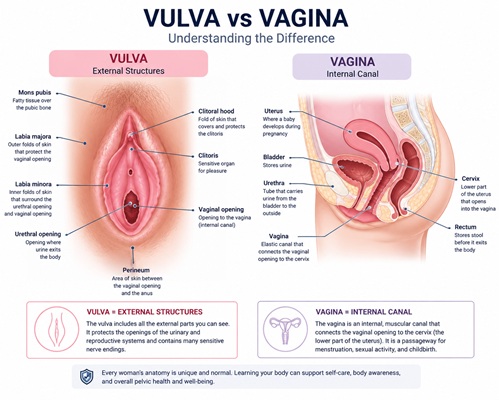
One of the most common misconceptions is that the vulva and vagina are the same thing.
The vagina is the internal canal that connects the cervix to the outside of the body.
The vulva refers to the external structures, including:
- Labia majora
- Labia minora
- Clitoris
- Clitoral hood
- Mons pubis
- Vaginal opening
Understanding this distinction is important because vulva massage focuses entirely on the external tissues.
Preparing for a Vulva Massage Session
Creating a comfortable environment can make a significant difference to the experience.
Choose a private space where you can relax without interruptions. Some women find it helpful to dim the lights, play calming music, or schedule time after a warm bath or shower.
Wash your hands thoroughly and keep fingernails clean and trimmed.
A body-safe water-based lubricant can also improve comfort by reducing friction and allowing smoother movements across sensitive tissues.
Most importantly, let go of expectations. The goal is simply to become more aware of your body and remain comfortable throughout the experience.
How to Perform Vulva Massage
The most important rule of vulva massage is to move slowly. Unlike a traditional muscle massage, there is no need to apply firm pressure or rush through the process.
Start With Relaxation
Spend a few minutes focusing on slow, deep breathing before you begin. Relaxing the body first often makes the experience feel more comfortable and natural 😌.
Explore the Outer Vulva First
Begin with gentle touch around the mons pubis and outer labia. This allows the body time to relax and helps you become aware of different sensations.
Use slow, sweeping movements with your fingertips and avoid applying excessive pressure.
Focus on the Labia
Labia massage is one of the most common vulva massage techniques. Using clean hands and, if desired, a water-based lubricant, gently glide your fingers along the outer and inner labia.
Some women prefer long sweeping strokes, while others find small circular movements more comfortable.
Women interested in more targeted approaches may also find our guide on clitoral stimulation techniques helpful.
Move Towards the Clitoral Hood
If comfortable, you may gradually explore the area around the clitoral hood. Many women find indirect contact through the hood more comfortable than direct stimulation.
Pay Attention to Sensations
There is no perfect vulva massage technique. What feels relaxing for one woman may feel completely different for another.
Comfort should always guide the experience.
Finishing the Session
When you’re ready to finish, gradually reduce pressure and allow yourself a few moments to rest and breathe ❤️.

What Does Vulva Massage Feel Like?
Every woman’s experience with vulva massage is different.
For many women, the first thing they notice is relaxation. Slowing down, focusing on breathing, and paying attention to the body can create a sense of calm similar to meditation or other mindfulness practices 😌.
As the tissues warm and circulation increases, some women report feelings of warmth, tingling, or increased awareness. Others simply notice that they become more conscious of areas they had previously paid little attention to.
It’s also normal for emotions to surface. Some women find that vulva massage helps them develop a healthier and more positive relationship with their bodies ✨.
There is no right or wrong response. The goal isn’t to achieve a specific sensation but rather to remain comfortable and present.
Common Vulva Massage Techniques
There are several vulva massage techniques that women commonly use.
Circular Massage
Using one or two fingers, make small circles around the outer vulva and surrounding tissues. This simple technique encourages awareness and can feel calming.
Sweeping Strokes
Slow, gentle strokes across the vulva may help promote relaxation and improve familiarity with different sensations.
Mons Pubis Massage
The mons pubis is the soft tissue located above the vulva. Gentle circles here often feel soothing and can help release tension.
Clitoral Hood Massage
Some women prefer indirect stimulation through the clitoral hood rather than direct contact with the clitoris itself.
Warm Palm Technique
Placing a warm hand over the vulva without movement can create a feeling of comfort and relaxation. Many women use this as a starting point before other vulva massage techniques.
Labia Massage: A Common Form of Vulva Massage
Labia massage is one of the most popular vulva massage techniques because it focuses on an area that many women rarely pay attention to outside of hygiene or intimate situations.
The labia contain sensitive tissues and numerous nerve endings, making them highly responsive to gentle touch. Most women find that light pressure feels significantly more comfortable than firm massage.
Because the tissues are delicate, patience is often more important than technique. Moving slowly allows you to focus on comfort and awareness rather than intensity.
A simple labia massage technique involves slowly gliding the fingertips along the outer labia using smooth, sweeping movements. Others prefer gentle circular motions that allow them to focus on specific areas.
Beginners often make the mistake of using too much pressure. In reality, slower and lighter movements are usually more comfortable.
The purpose of labia massage is not necessarily sexual stimulation. Many women use it to improve body awareness, become more familiar with their anatomy, encourage relaxation, and explore what feels comfortable 🌸.
Vulva Massage During Menopause
Hormonal changes during menopause can affect vulvar tissues and sensitivity.
Some women notice changes in comfort, lubrication, or sensitivity during this stage of life. Gentle vulva massage combined with a body-safe lubricant may help improve comfort for some women.
If you experience ongoing pain, burning, irritation, or unusual symptoms, seek advice from a qualified healthcare professional.
Many women exploring menopause-related self-care also look into practices such as how to breast massage as part of a broader body-awareness routine.
Vulva Massage and Intimacy
Vulva massage can also be incorporated into intimate relationships.
Communication is essential. Partners should discuss comfort levels, preferences, and boundaries before beginning.
When practiced together, vulva massage often works best when approached slowly. Rather than focusing on a specific outcome, many couples find it more rewarding to focus on connection, trust, and attentiveness 💕.
Removing pressure and expectations often leads to a more comfortable and positive experience.
What Does Research Say About Vulva Massage?
Research specifically examining vulva massage is limited. However, studies involving mindfulness, body-awareness practices, and massage therapy suggest that gentle touch and relaxation practices may contribute to stress reduction and overall wellbeing.
While vulva massage is not a medical treatment, many women choose to include it within a broader self-care routine alongside exercise, stress management, and healthy lifestyle habits.
Can Vulva Massage Help With Vulvodynia?
Vulvodynia is a condition characterized by persistent vulvar pain or discomfort.
Some women explore vulvodynia massage techniques, relaxation strategies, or pelvic floor therapy as part of a broader management plan.
However, vulvodynia can have many causes. Anyone experiencing ongoing pain, burning, irritation, or unexplained symptoms should seek advice from a qualified healthcare professional before attempting self-treatment.
Vulva massage is not a substitute for medical care.
Women experiencing pelvic tension may also be interested in learning about Thiele massage, a specialized technique sometimes used by pelvic health practitioners to address pelvic floor muscle dysfunction.
Common Mistakes to Avoid
One of the most common mistakes is using too much pressure. The vulva contains delicate tissues and generally responds better to gentle touch.
Another mistake is rushing. Taking time to relax and move slowly often leads to a more comfortable experience.
Some women compare their experience to what they have read online. Remember that anatomy, sensitivity, and preferences vary significantly from person to person.
Finally, never continue if you experience pain, irritation, or discomfort.
Related Topics
Women interested in related topics may also find our guides on:
helpful for learning more about pelvic wellness, body awareness, and intimate self-care.
Frequently Asked Questions
What is the difference between vulva massage and vaginal massage?
Vulva massage focuses on the external genital structures, including the labia, clitoral hood, mons pubis, and surrounding tissues. Vaginal massage typically refers to techniques involving the internal vaginal canal. Most discussions about vulva massage focus entirely on the external tissues and do not involve internal techniques.
Can vulva massage help with stress?
Many women find that slow, mindful touch promotes relaxation and encourages them to focus on the present moment. While vulva massage isn’t a treatment for stress, it can form part of a broader self-care routine designed to support wellbeing.
Can vulva massage increase body awareness?
Many women report that vulva massage helps them become more familiar with their anatomy and more aware of how their bodies respond to touch. Increased body awareness can contribute to confidence, comfort, and a stronger connection with overall wellbeing.
Is vulva massage safe during menopause?
Many women continue to practice vulva massage during menopause. However, hormonal changes can affect tissue sensitivity and lubrication. Using gentle pressure and appropriate lubrication may help improve comfort.
Conclusion
Whether you’re exploring vulva massage for relaxation, body awareness, intimacy, or simple curiosity, comfort should always come first. Vulva massage is a personal practice, and there is no single technique that works for everyone.
By moving slowly, staying present, and paying attention to your body’s signals, vulva massage can become a valuable part of a broader self-care routine that supports confidence, relaxation, and overall wellbeing ❤️.
Over time, vulva massage may help you develop a stronger connection with your body, improve body awareness, and create opportunities for greater comfort and self-understanding.
Reviewed June 2026 by April Merrick, Wellness Editor
📚References
📚 Cleveland Clinic. (2024): Vulva: Anatomy, Function & Conditions
📚 Mayo Clinic: Vulvodynia – Symptoms and Causes
📚 National Institute on Aging – What Is Menopause
📚 National Center for Complementary and Integrative Health (2024): Meditation and Mindfulness – Effectiveness and Safety
⚠️ Disclaimer:
This article is for informational purposes only and does not constitute medical advice. Always consult with a licensed healthcare provider or certified massage therapist before beginning any new treatment, especially if you have pre-existing health conditions or concerns.
About The Author