A massage chair is one of the biggest wellness purchases you can make, and it’s easy to get lost in feature lists. Every listing promises 4D rollers, dozens of programs and “AI” body mapping, but a few unglamorous details decide whether you’ll actually enjoy using it: whether it fits your body, how far the rollers reach, and what happens if something breaks.
We don’t sell massage chairs, so this guide is simply about how to choose a massage chair without overpaying. You’ll learn what to check first, which features are worth paying for, which ones are mostly marketing, and when a much cheaper chair pad makes more sense.
Quick Answer: How to Choose a Massage Chair
Start with fit: check the chair’s height and weight range against your own. Next, look at the track. An SL-track reaches from your neck down to your glutes, while an S-track stops at the lower back. Then measure your space and doorways, and read the warranty for parts, labor and in-home service. Rollers, airbags, heat and zero gravity come after those. If you’re short on space or budget, a shiatsu chair pad may be all you need.
Table of Contents
How to Choose a Massage Chair That Fits Your Body

Fit matters more than any feature. If the rollers can’t reach your shoulders, or your feet hang over the end of the leg rest, even an expensive chair will disappoint. Before you look at anything else, find these numbers in the listing or manual:
- Recommended user height. Many chairs list a range of roughly 5 feet to just over 6 feet. Taller people need an extendable leg rest and a long track.
- Maximum user weight. Commonly somewhere between about 220 and 285 pounds. Staying within the limit protects the motor and the frame.
- Body scan. Most chairs scan your shoulder height and adjust the rollers to match. Look for one that lets you fine-tune the shoulder position afterward.
- Shoulder and hip width. Arm and hip airbags can feel tight on broad frames. Check the seat width and read reviews from people with a similar build.
If you’re petite, look for a chair whose leg rest slides in far enough, or one that lets you switch off the arm airbags. If you can, try a chair in person at a showroom or gym first. Our guide to using the massage chairs at Planet Fitness is a low-cost way to test what you like.
S-Track vs L-Track vs SL-Track: Which Do You Need?
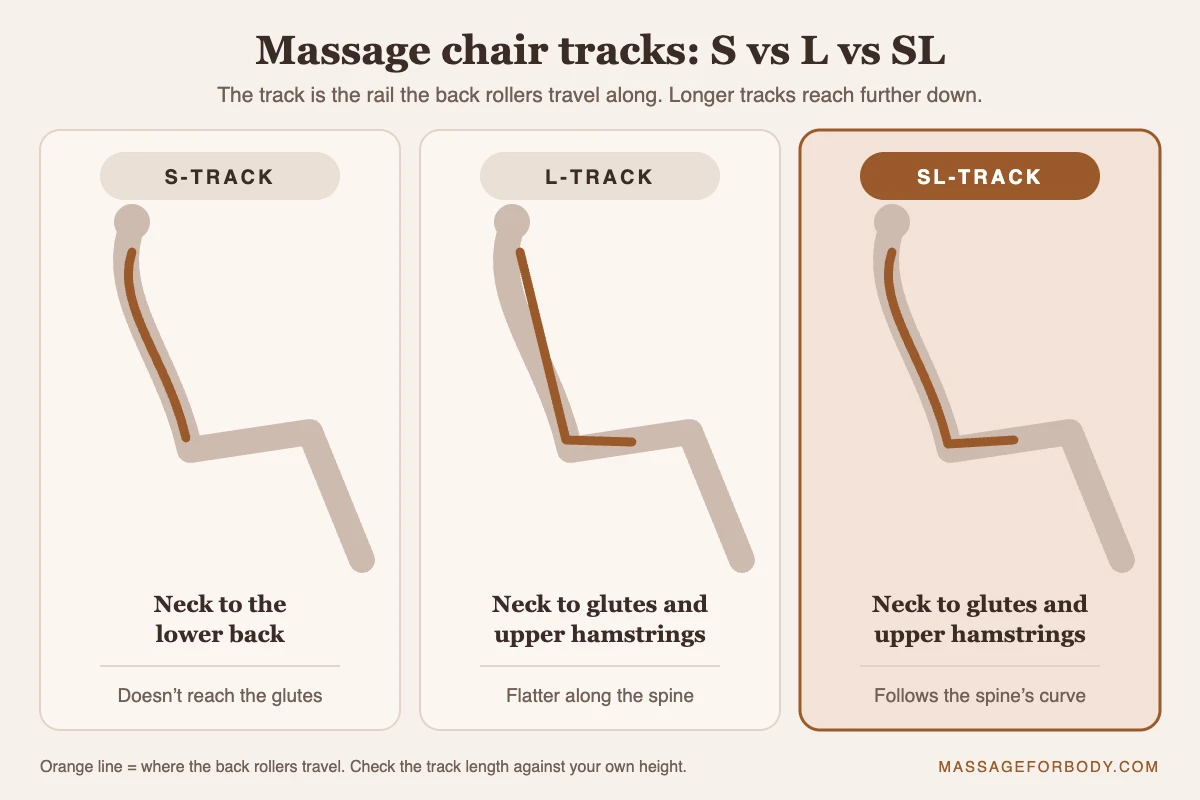
The track is the rail the back rollers travel along, and it shapes the whole massage.
- S-track: curves to follow your spine from the neck to the lower back. It feels close and even, but it stops above your glutes.
- L-track: runs down the back and continues under the seat, so the rollers reach your glutes and upper hamstrings. Older L-track chairs can feel flatter along the spine.
- SL-track: combines the two, following the spine’s curve and then extending under the seat. This is now the standard in most mid-range and premium chairs.
For most people, an SL-track is the best choice, especially if you sit a lot and feel tightness in your lower back and glutes. Track length is worth checking too. A longer track gives taller users full coverage from the neck down.
2D, 3D and 4D Rollers: What Actually Changes?
Roller labels describe how the massage heads move.
- 2D: the rollers move up and down and side to side. You can’t change how far they press in.
- 3D: the rollers can also push further out from the backrest, so you can adjust the depth and intensity. This is the most useful upgrade for most people.
- 4D: adds control over the speed and rhythm of the movement, to feel more like a pair of hands.
A good 3D chair often feels better than a cheap 4D one. “4D” describes a type of movement, not how well it’s done, and some listings use the term loosely. If you can, try the chair or read reviews that describe the feel of the rollers rather than the spec sheet.
Airbags, Foot Rollers, Heat and Zero Gravity

- Airbags inflate and squeeze your arms, hips, calves and feet. They give a compression massage that many people enjoy, especially on tired legs. More airbags isn’t automatically better; look for adjustable intensity.
- Foot rollers sit under the soles of your feet and can feel strong. If you have sensitive feet, look for a chair that lets you turn them off.
- Heat is usually in the lower back or calves. It feels soothing, but it’s mild and slow to warm up in many chairs.
- Zero gravity reclines you so your knees are level with or above your heart. Your weight rests more evenly on the backrest, which many people find relaxing and which lets the back rollers press in more.
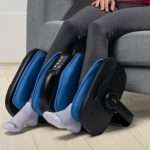
If tired legs are your main concern, compare the chair with a dedicated device from our guide to the best leg massagers. It may do the job for far less.
Space, Weight and Delivery

Massage chairs are big and heavy, often 200 to 300 pounds, so check the practical details before you buy:
- Room size: measure the chair upright and fully reclined. Many need several extra feet of length when they recline.
- Wall clearance: “space-saving” or wall-hugger designs slide forward as they recline, so they can sit a few inches from the wall.
- Doorways and stairs: check the width of every doorway and hallway on the route. Many chairs come in two or three boxes and are assembled in the room.
- Delivery type: curbside delivery means you move it yourself. White-glove delivery usually includes carrying it in, assembly and removing the packaging.
- Floors and power: use a mat to protect wood floors, and plug the chair into a grounded outlet, not a long extension cord.
Warranty, Returns and Where to Buy
A massage chair has motors, belts, airbags and electronics, so the warranty matters as much as the features. Read it for these points:
- What’s covered, and for how long: frame, parts and labor are often covered for different periods. A long frame warranty with only one year of parts is less generous than it sounds.
- In-home service: find out whether a technician comes to you, or whether you have to box and ship a 250-pound chair.
- Returns: check the return window, restocking fees and who pays for return shipping.
- Authorized sellers: buy from the brand’s own store or an authorized dealer. Warranties may not apply to chairs bought from unauthorized resellers.
Most established massage chair brands sell mainly through their own websites and specialist dealers rather than Amazon. That’s why this guide doesn’t list chairs to buy: use the checks above on any chair you’re considering, and buy direct or from an authorized dealer.
Massage Chair Features That Are Mostly Marketing
Some features look impressive in a listing but add little to the massage itself:
- “AI” and smart features: most chairs simply scan your shoulder height. Labels like “AI body mapping” rarely mean more than that.
- Huge program lists: 30 auto programs sounds generous, but most people settle on two or three favorites.
- App control and voice commands: handy for some, but a clear remote is usually easier.
- Speakers and light shows: Bluetooth speakers and LED lights are nice extras, not reasons to pay more.
- Bigger numbers: more airbags, more rollers or a higher “D” rating don’t guarantee a better massage.
What You Get at Each Budget Level
- Entry level: usually 2D or basic 3D rollers, an S-track or short L-track, fewer airbags and a basic remote. Fine for a relaxing back massage, but fit is often limited.
- Mid-range: 3D rollers, an SL-track, body scan, zero gravity, foot rollers and heat. This is the sweet spot for most households.
- Premium: 4D rollers, longer tracks, better build quality, finer controls and stronger warranties, often with in-home service.
Whatever your budget, the answer to how to choose a massage chair is the same: spend more on fit, the track, build quality and the warranty, not on extra programs.
Chair Pad Instead? When It’s the Smarter Buy
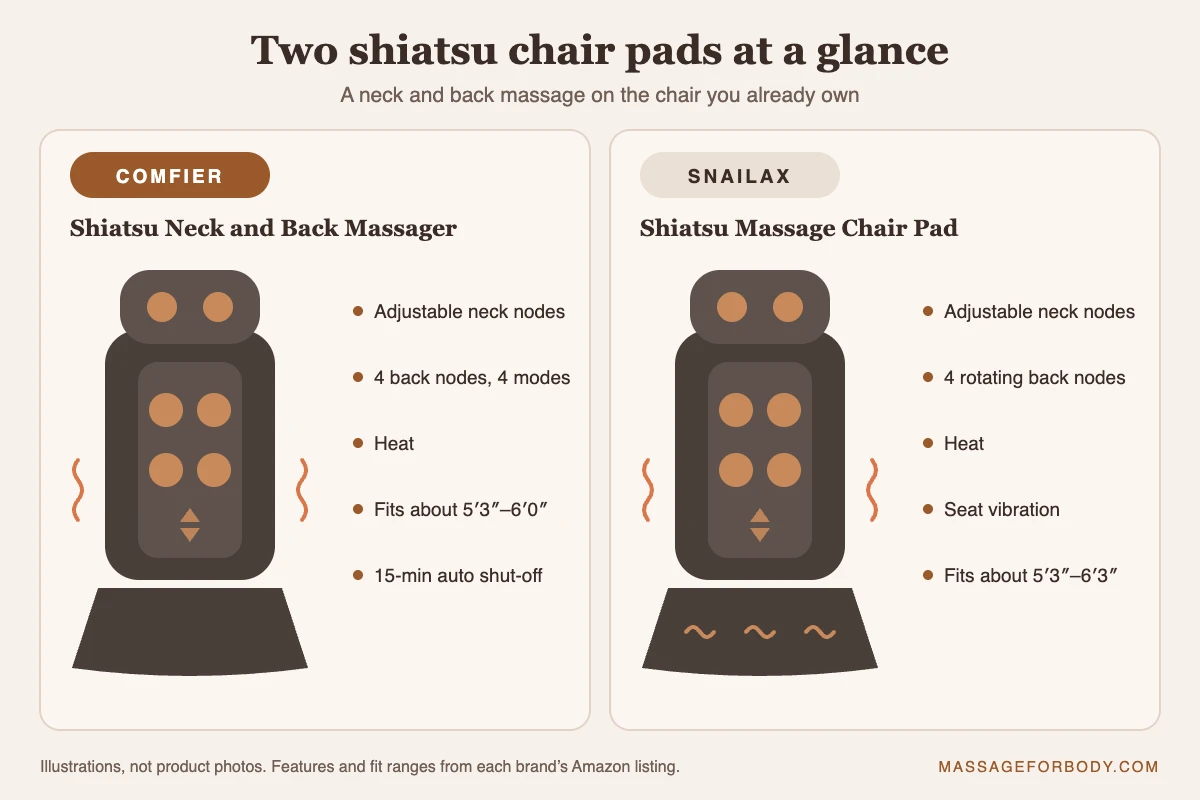
A shiatsu massage chair pad straps onto a chair or sofa you already own. It won’t give you airbags, leg massage or zero gravity, but for a neck and back massage it costs a fraction of a full chair, weighs about 20 pounds and fits in a closet. It’s a good fit for small apartments, tight budgets or anyone who wants to try a massage chair first.
We earn a small commission if you buy through our links, at no cost to you. It doesn’t change what we recommend.
COMFIER Shiatsu Neck and Back Massager
This chair pad has adjustable shiatsu neck nodes, four back nodes with upper, lower, full-back and spot modes, and heat. The listing says it fits many users of about 5 feet 3 inches to 6 feet, and it switches off automatically after 15 minutes.
Snailax Shiatsu Massage Chair Pad
The Snailax combines an adjustable shiatsu neck massager with four rotating back nodes, heat and seat vibration. Its listing gives a fit range of about 5 feet 3 inches to 6 feet 3 inches, which suits taller users better.
For something you can move around your body, see our picks for the best handheld massagers with heat, or for an older parent, the best massagers for seniors.
What Does the Research Say About Massage Chairs?
Research on massage chairs is still limited, and much of it is small. A 2024 scoping review pulled together 18 studies and found reports of lower stress and mental fatigue, less muscle stiffness and some pain relief. Most of the studies were small, though, and the authors called for larger, better-designed trials. The review was also supported by a massage chair maker.
In one of the longer trials, 80 adults aged 50 to 75 used a massage chair for 30 minutes twice a day for six months. They reported better mood and self-rated health than a group that didn’t use one, but the stress hormone results were mixed. The fair takeaway: a massage chair is a good relaxation tool, not a medical treatment.
Who Should Check With a Doctor First
Massage chairs are safe for most healthy adults, but manufacturers list several groups who should get medical advice before using one. Osaki’s manual, for example, includes people who:
- Have a pacemaker or another implanted electronic device.
- Are pregnant.
- Have, or have had, blood clots or thrombosis.
- Have osteoporosis, a spinal condition or a recent injury or surgery.
- Have diabetes or reduced feeling in their skin, which makes heat settings riskier.
Mayo Clinic also advises caution with massage if you have a bleeding disorder, take blood-thinning medication, or have burns, healing wounds or a broken bone. Rare injuries have been reported too, including a spinal compression fracture in an older woman, so start on a low intensity if you have weak bones.
Keep sessions short, usually 15 to 30 minutes. Start on low intensity, and stop if you feel pain, numbness or dizziness. Some soreness the next day can be normal, as explained in our guide on why you might feel sore after a massage. Keep children and pets away from the chair’s moving parts and leg rest, and don’t let children use it unsupervised.
Frequently Asked Questions
Is a massage chair worth it?
A massage chair can be worth it if you’ll use it several times a week, have the space for it and buy one that fits your body. For many people it replaces some paid massages and becomes a daily way to unwind. If you only want an occasional back massage, a shiatsu chair pad or a handheld massager gives you much of the benefit for far less money.
How long should you sit in a massage chair?
Most manufacturers recommend about 15 to 30 minutes per session, and most auto programs end within that time. Longer sessions don’t add much and can leave muscles sore or tender. Start with shorter sessions on low intensity, especially in your first week, and build up if you feel fine the next day. Stop if anything feels painful or numb.
Are massage chairs good for back pain?
A massage chair can help tight back muscles feel looser and more relaxed for a while, and many people find that helpful for everyday stiffness. It isn’t a treatment for back conditions, though. If you have a herniated disc, sciatica, a recent injury or back pain that’s severe or getting worse, see a doctor or physical therapist before using one.
Is it safe to use a massage chair every day?
For most healthy adults, a short daily session of 15 to 30 minutes is fine. Use a comfortable intensity, give any sore spots a rest, and avoid more than one or two sessions a day. If you’re pregnant, have a pacemaker, a history of blood clots, osteoporosis or another medical condition, ask your doctor before using a massage chair regularly.
What is the best massage chair for a tall person?
Look for a chair with a long SL-track, an extendable leg rest and a recommended user height that includes yours, ideally with some room to spare. A body scan that adjusts to your shoulder height helps too. If you’re over about 6 feet 2 inches, check the specs carefully and try the chair in person if you can, because many standard chairs stop short.
Is a massage chair as good as a professional massage?
No, but it does a different job. A massage therapist can adjust pressure to your body, work around problem areas and use techniques a machine can’t. A massage chair gives you a consistent, convenient massage whenever you want one. Many people use both: a chair for everyday relaxation and a professional massage for specific tension or recovery.
The Bottom Line
Choosing a massage chair comes down to a few checks: make sure it fits your height and weight, choose an SL-track for neck-to-glute coverage, measure your space and doorways, and read the warranty closely. 3D rollers, zero gravity and calf airbags are worth having. “AI” labels, long program lists and app features mostly aren’t. If space or budget is tight, a shiatsu chair pad gives you much of the back massage for far less.
References
- Osaki. Monarch LE 3D Massage Chair Owner’s Manual: Safety Precautions.
- Mayo Clinic. Massage therapy.
- Youn BY, Cho H, Joo S, Kim HJ, Kim JY. Utilization of massage chairs for promoting overall health and wellness: A rapid scoping review. EXPLORE. 2024;20(3):285–297.
- Baek JY, Lee E, Gil B, Jung HW, Jang IY. Clinical effects of using a massage chair on stress measures in adults: A pilot randomized controlled trial. Complementary Therapies in Medicine. 2022;66:102825.
Disclaimer:
This article is for general information only and is not a substitute for professional medical advice. Check with your doctor before using a massage chair if you are pregnant, have a pacemaker, a history of blood clots, osteoporosis, a spinal condition or diabetes, or are recovering from an injury or surgery.