

A new scar can feel tight, itchy, raised or numb, and many surgeons and physical therapists suggest scar massage once it has healed. Done gently and regularly, it may help a scar become softer, flatter and more comfortable as it matures.
This guide explains what massage can and can’t do for scar tissue, when it’s safe to start, how to massage a scar step by step, and how to handle specific scars, from C-section and facial scars to raised keloids and scar tissue in a muscle.
🩹 Quick Answer: How Do You Massage Scar Tissue?
Wait until the wound is fully closed, with no scabs or stitches, usually around 2 to 3 weeks after surgery, and check with your surgeon. Then use a little lotion and firm fingertip pressure to move the skin along the scar, in small circles and across it. Aim for about 10 minutes, twice a day, for several months. It should never hurt. Don’t massage raised, keloid or burn scars without medical advice.
Table of Contents
What Is Scar Tissue?
When skin or muscle is injured, your body repairs it with collagen, the same protein that gives healthy tissue its strength. In a scar, that collagen is laid down quickly and less neatly than in normal tissue, so the area can feel thicker, tighter and less stretchy.
Scars keep changing for months. A new scar is often pink, raised and firm, and over 12 to 18 months most gradually become paler, flatter and softer. Some scars stay raised (hypertrophic scars), and some grow beyond the original wound (keloids). Scar tissue can also form inside a muscle after a strain or tear, which is different from a skin scar and is covered later in this guide.

Can Massage Break Down Scar Tissue? What the Research Says
Massage doesn’t dissolve or remove scar tissue. What it may do is help a healing scar soften and become more flexible, ease itching and sensitivity, and stop the skin feeling stuck to the tissue underneath.
The evidence is limited. A 2012 review in Dermatologic Surgery looked at 10 studies including 144 people who had scar massage. Overall, about 46% improved on measures such as scar appearance, itching, pain or range of motion, and results were better for surgical scars than for burn or injury scars: 27 of 30 surgical scars improved. But the studies were small and used very different methods, and the authors concluded that the evidence for scar massage is weak.
So scar massage is a reasonable, low-cost thing to try for a healed surgical scar, as long as you keep your expectations realistic and follow your surgeon’s advice.
When to Start Scar Massage
- Surgical scars: only once the incision is fully closed, with no scabs, stitches or oozing, often around 2 to 3 weeks after surgery. Your surgeon may give you a specific date.
- C-section scars: wait until the incision has fully healed and your OB-GYN or midwife has checked it, usually at your postpartum visit.
- Burn scars: only under the guidance of your burn care team, because healing skin can be fragile.
- Older scars: it’s not too late. Massage may still help with tightness or sensitivity in a scar that’s months or years old, though changes tend to be smaller.
Never massage an open wound, a scab, or skin that looks infected.
How to Massage a Scar Step by Step
- Wash your hands and make sure the scar is clean and dry.
- Apply a little unscented lotion or moisturizer. You need enough to stop your fingers dragging, but not so much that they slide without moving the skin.
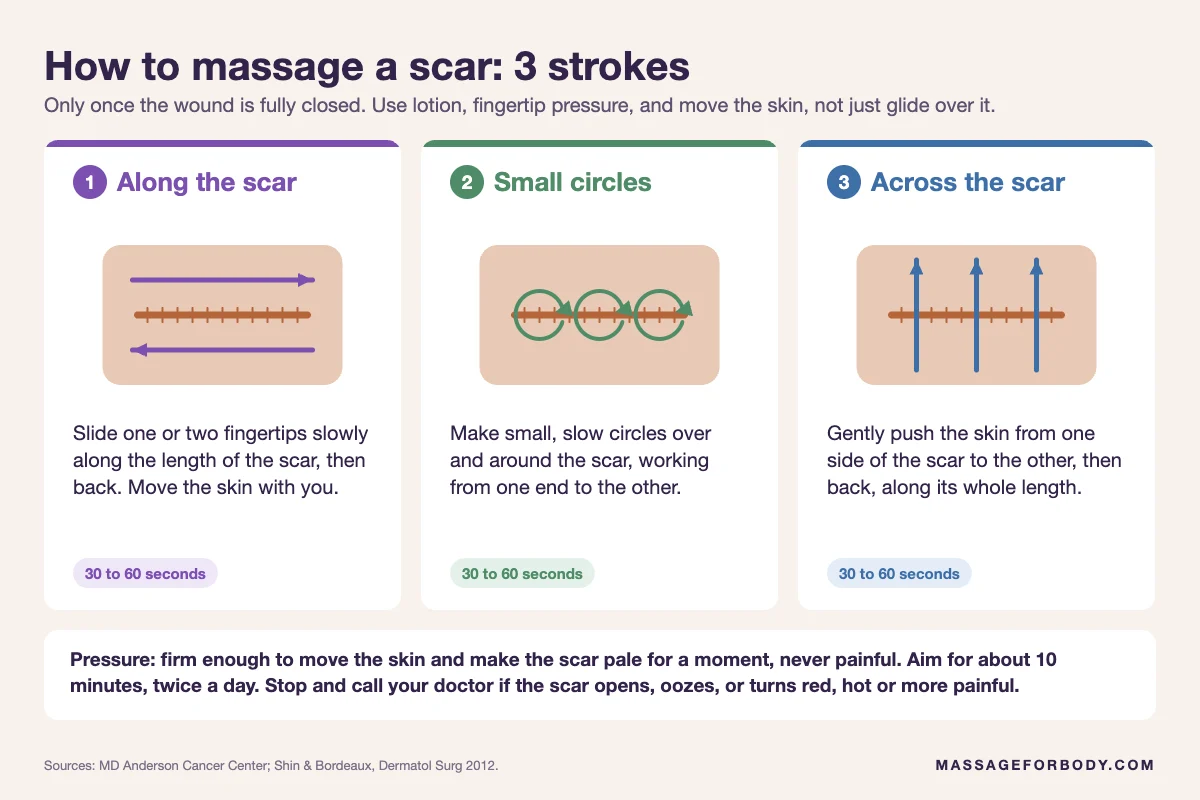
- Along the scar. Press with one or two fingertips and slowly move the skin along the length of the scar, then back.
- Small circles. Make slow circles over and around the scar, working from one end to the other.
- Across the scar. Gently push the skin from one side of the scar to the other along its whole length.
- Check the pressure. Firm enough to move the skin and make the scar go pale for a moment, never painful.
How Long and How Often to Massage a Scar
Consistency matters more than pressure. MD Anderson Cancer Center suggests massaging a healed scar for at least 10 minutes, twice a day, for about six months. Occasional massage is unlikely to make much difference.
Protect healing scars from the sun too. UV light can darken a new scar, so cover it or use sunscreen when you’re outdoors.
Scar Massage for Specific Scars
C-section scars
Once your OB-GYN or midwife is happy with how the incision has healed, gentle massage may help the scar feel less tight or numb, and some people find it helps them get used to touching the area again. Start very lightly, especially if the skin above the scar feels sensitive. If you have pain deep in the belly or pelvis, or the scar area feels hard and sore, ask about a pelvic floor physical therapist. Here’s more on getting a massage after a C-section.

Facial and lip scars
Facial skin is thinner, so use lighter pressure, one fingertip and smaller movements. For a scar on the lip, gently move the skin along and across the scar without stretching the lip hard. Follow your surgeon’s instructions after any facial surgery, and use sunscreen every day while the scar is still pink.
Scars after surgery, such as joint replacement
After a knee or hip replacement, or other orthopedic surgery, your physical therapist will usually show you when and how to massage the scar as part of your rehab. Follow their timeline, because moving the joint and the tissues around it matters as much as the scar itself. For breast surgery scars, see our guides to massaging scar tissue after breast surgery and massage after breast augmentation.

Raised and keloid scars
Raised (hypertrophic) scars and keloids are different from flat scars. Don’t massage them without advice from a dermatologist. For people prone to keloids, the American Academy of Dermatology recommends silicone gel or silicone sheets and, in some cases, pressure. A dermatologist can also offer treatments such as steroid injections if a keloid is growing, itchy or painful.
Scar Tissue in a Muscle, Such as the Hamstring
After a muscle strain or tear, the muscle heals partly with scar tissue. This can leave the area feeling tight or knotty, and people often search for ways to break up scar tissue in the hamstring. The most effective approach is a graded rehab program from a physical therapist: gentle stretching and strengthening help the new tissue line up and become stronger.
Once the acute pain has settled and your physical therapist or doctor is happy, gentle massage around the area may ease tightness and feel good. It should never be painful. See our guides to massaging a hamstring strain and massaging a pulled muscle. If you felt a pop, have significant bruising, or can’t walk normally, see a doctor before you try any massage.

What Scar Massage Won’t Do
- It won’t remove or erase a scar.
- It won’t “dissolve” or “break down” scar tissue in the way the phrase suggests. Changes happen slowly as the scar matures.
- It isn’t a treatment for keloids or burn contractures without specialist advice.
- It doesn’t replace physical therapy after an injury or joint surgery.
When to See a Doctor
Stop massaging and contact your doctor or surgeon if:
- the scar opens up, bleeds or oozes
- it becomes red, warm, swollen or more painful, or you have a fever (possible infection)
- a scar keeps growing beyond the original wound, or is very itchy or painful (possible keloid)
- a scar over a joint is limiting how far you can move it
- you have new numbness, tingling or weakness near the scar
Frequently Asked Questions
When should you start massaging a scar?
Only once the wound is fully closed, with no scabs, stitches or oozing. For most surgical scars that’s around 2 to 3 weeks after surgery, but your surgeon may give you a specific date. C-section scars should be checked by your OB-GYN or midwife first, and burn scars should only be massaged with guidance from your burn care team. It’s not too late for an older scar, though changes tend to be smaller.
How long should you massage a scar each day?
A common recommendation, including from MD Anderson Cancer Center, is at least 10 minutes, twice a day, kept up for about six months. Short, regular sessions matter more than pressing hard. Use a little lotion, move the skin along the scar, in small circles and across it, and stop if it hurts or the skin breaks down.
Can you break down old scar tissue with massage?
Not in the sense of dissolving it. Scars that are months or years old are more settled, but massage may still help them feel softer, less tight and less sensitive. Research suggests results are better for surgical scars than for burn or injury scars. For a tight scar that limits movement, a physical therapist or dermatologist can suggest other options.
Should scar massage hurt?
No. You should feel firm pressure and the skin moving, and the scar may go pale for a moment, but it shouldn’t be painful. Mild tenderness can happen at first, especially with a sensitive scar. If massage causes sharp pain, or the scar becomes red, warm or swollen afterward, stop and check with your doctor.
What should I use for scar massage?
A plain, unscented lotion or moisturizer works well. You need just enough to stop your fingers dragging while still moving the skin. There’s little good evidence that vitamin E or cocoa butter adds anything. Silicone gel or sheets are a separate treatment, often recommended for raised scars, and you can ask your doctor whether they suit your scar.
Can you massage a keloid scar?
It’s best not to without a dermatologist’s advice. Keloids are raised scars that grow beyond the original wound, and they behave differently from flat scars. Dermatologists often recommend silicone gel or sheets and pressure for people prone to keloids, and can offer treatments such as steroid injections for an existing keloid.
The Bottom Line
Scar massage is a simple, low-risk way to help a healed scar feel softer and more comfortable, but it won’t erase a scar or dissolve scar tissue. Start only when the wound is fully closed, use gentle, regular strokes along, around and across the scar, protect it from the sun, and leave raised, keloid and burn scars to the experts. For tight tissue elsewhere in the body, see our guide to massaging tight muscles.
References
- Shin TM, Bordeaux JS. (2012). The role of massage in scar management: a literature review. Dermatologic Surgery.
- MD Anderson Cancer Center. Scar massage after cancer treatment: 6 things to know.
- American Academy of Dermatology. Keloids: self-care.
- Mayo Clinic. Keloid scar: diagnosis and treatment.
⚠️ Disclaimer:
This article is for informational purposes only and does not constitute medical advice. Always consult with a licensed healthcare provider or certified massage therapist before beginning any new treatment, especially if you have pre-existing health conditions or concerns.




wonderful writing, thank you