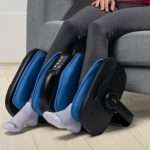
If you live with diabetes, tired, achy feet at the end of the day are common, and a foot massager for diabetics can feel like an easy way to unwind. But diabetes changes the rules. Nerve damage can dull feeling in your feet, so a massager that’s too hot or too strong could hurt you without you noticing.
This guide starts with the safety question, then covers six gentle foot and leg massagers we tested, chosen for adjustable pressure and heat you can switch off. It also explains what a massager can and can’t do for diabetic neuropathy, and when to skip one altogether.
We earn a small commission if you buy through our links, at no cost to you. It doesn’t change what we recommend.
Can Diabetics Use Foot Massagers?
Many people with diabetes can use a foot massager safely, but check with your doctor or podiatrist first, especially if you have neuropathy, poor circulation or a history of foot ulcers. Keep the heat off, start on the lowest setting, keep sessions short and check your feet before and after. Skip it entirely if you have an open sore, an infection, swelling or a possible blood clot. A massager can help feet feel more comfortable, but it doesn’t treat neuropathy.
Table of Contents
Choosing a Foot Massager for Diabetics: Our Picks at a Glance
| Model | Type | Areas | Heat | Pressure control | Best for |
|---|---|---|---|---|---|
| FIT KING Foot and Calf Air Massager | Air compression | Feet, calves | None | 2 modes, 3 levels | Best overall |
| MIKO Shiatsu Foot Massager | Shiatsu and air | Feet | Separate on/off | 5 pressure levels | Gentle shiatsu |
| Cloud Massage Shiatsu Foot | Shiatsu and air | Feet, ankles, calves | 2 levels, can be off | Adjustable | Foot and calf |
| Lifepro VibraFlow | Vibration | Feet, calves | None | 30 speeds | No kneading |
| RENPHO Foot Massager | Shiatsu and air | Feet | Up to 131°F, can be off | 3 levels | Budget |
| Human Touch Reflex SOL | Rotating foot and calf | Feet, calves | Warm air, own button | Multiple speeds | Premium |
Heat details come from each brand’s listing or manual. If you have neuropathy, keep heat switched off on every model.
How we chose: our team tested every massager on this list hands-on. Because this guide is for people with diabetes, we put safety first: we looked for adjustable or gentle pressure, heat that can be switched off (or no heat at all), auto-off timers and clear controls. We then checked each brand’s published specifications and safety guidance, plus thousands of US owner ratings, and only included models sold by the brand’s own store or by Amazon.
The Best Foot Massager for Diabetics: 6 Gentle Picks
1. FIT KING Foot and Calf Air Massager: best overall

For many people with diabetes, gentle air compression is the safest place to start, and the FIT KING is the most popular option, with more than 20,000 ratings. Air chambers wrap your feet and calves and squeeze and release in a rhythm, with no rollers pressing into the soles. It has two modes and three intensities, and it has no heat at all, which removes the risk of burns. FIT KING describes it as relieving minor muscle aches and temporarily increasing circulation in the treated areas.
Keep in mind: the wraps fit calves from about 12.5 to 28.5 inches with the extensions included, so measure first. Don’t use compression if you have a possible blood clot, peripheral artery disease or heart failure unless your doctor says it’s OK.
Safety note: start on the lowest intensity and check your skin afterward for red marks from the wraps.
2. MIKO Shiatsu Foot Massager: best gentle shiatsu

If you want kneading, the MIKO gives you more control than most shiatsu machines, which is what you want in a foot massager for diabetics. Its remote has five pressure levels and three modes, and both the heat and the air compression have their own on/off buttons, so you can use gentle kneading alone. A 15-minute auto timer keeps sessions short, and the washable foot liners make it easier to keep clean. It has more than 17,000 ratings averaging 4.5 stars.
Keep in mind: shiatsu rollers press firmly into the soles, even on low settings. If your feet are numb, you may not feel when it’s too much, so ask your podiatrist whether shiatsu is right for you.
Safety note: turn the heat off and use the lowest pressure level first.
3. Cloud Massage Shiatsu Foot Massager: best for feet, ankles and calves
The Cloud Massage is a large shiatsu machine with a tilting base, so you can angle it to work on your feet, ankles or calves. It combines kneading rollers with air compression, has adjustable intensity and two heat levels, and its manual shows heat has its own button so you can turn it off. Cloud Massage also suggests that people with sensitive feet start on low settings, and even wrap their feet in a towel to soften the pressure.
Keep in mind: it weighs about 22 pounds and takes up floor space. Heat may come on when you start it, so check the heat light every time.
Safety note: use a towel layer and the lowest intensity until you know how your feet respond.
4. Lifepro VibraFlow: best vibration massager (no kneading)
Some people prefer vibration to kneading, and the Lifepro VibraFlow is a good foot massager for diabetics who find rollers too intense. It’s a flat footrest with textured pads that vibrates, with no rollers squeezing your feet. You can choose from nine preset modes or 30 speeds using the panel or remote, and you can tilt it on its side to rest your calves on it. It has no heat function, weighs about 11 pounds and is sold by Amazon.com.
Keep in mind: vibration feels lighter than kneading, which suits sensitive feet, but strong vibration can still be uncomfortable. Start on the lowest speed.
Safety note: sit with your feet resting on the pads rather than standing on it.
5. RENPHO Foot Massager: best budget pick
The RENPHO is a compact, budget-friendly foot massager for diabetics who want shiatsu. It combines kneading with air compression, with three intensity levels and its own heat button. It has more than 10,000 ratings and is FSA and HSA eligible. RENPHO lists the heat at up to 131°F (55°C), which is warm enough to burn skin that can’t feel it, so if you have neuropathy, leave the heat off.
Keep in mind: it only covers the feet, and the kneading is firmer than air compression. It’s best for people with diabetes who still have good feeling in their feet and their doctor’s OK.
Safety note: check the heat button is off before you put your feet in.
6. Human Touch Reflex SOL: best premium foot and calf massager

Human Touch’s Reflex SOL massages the feet and calves together with a rotating, upward motion, plus reflexology rollers under the arches. Warm air heat has its own button, it ends each session automatically after about 15 minutes, and the sleeves zip off for washing. It fits feet up to a men’s size 14 and is HSA and FSA eligible.
Keep in mind: it’s the most expensive and heaviest pick, at about 25 pounds. Human Touch advises anyone with neuropathy, diabetes, reduced feeling or circulation problems to get a doctor’s approval before using it, and to start on the lowest setting for a short session.
Safety note: its manual warns that heated surfaces can burn and shouldn’t be used where circulation is poor, so keep the warm air off.
Revitive Medic Coach: an FDA-cleared option to ask your doctor about
You may also see the Revitive Medic Coach, an electrical muscle stimulation (EMS) footpad. It’s FDA-cleared for uses including temporarily increasing local circulation and as an add-on treatment for pain, swelling and cramping in people with poor circulation in the lower legs. It isn’t cleared for neuropathy, and it isn’t sold on Amazon in the US, so we haven’t included a link. If it interests you, ask your doctor first, especially if you have a pacemaker or another implanted device. Our guide to how long to use an EMS foot massager explains how these devices work.
How to Use a Foot Massager for Diabetics Safely: 6 Rules
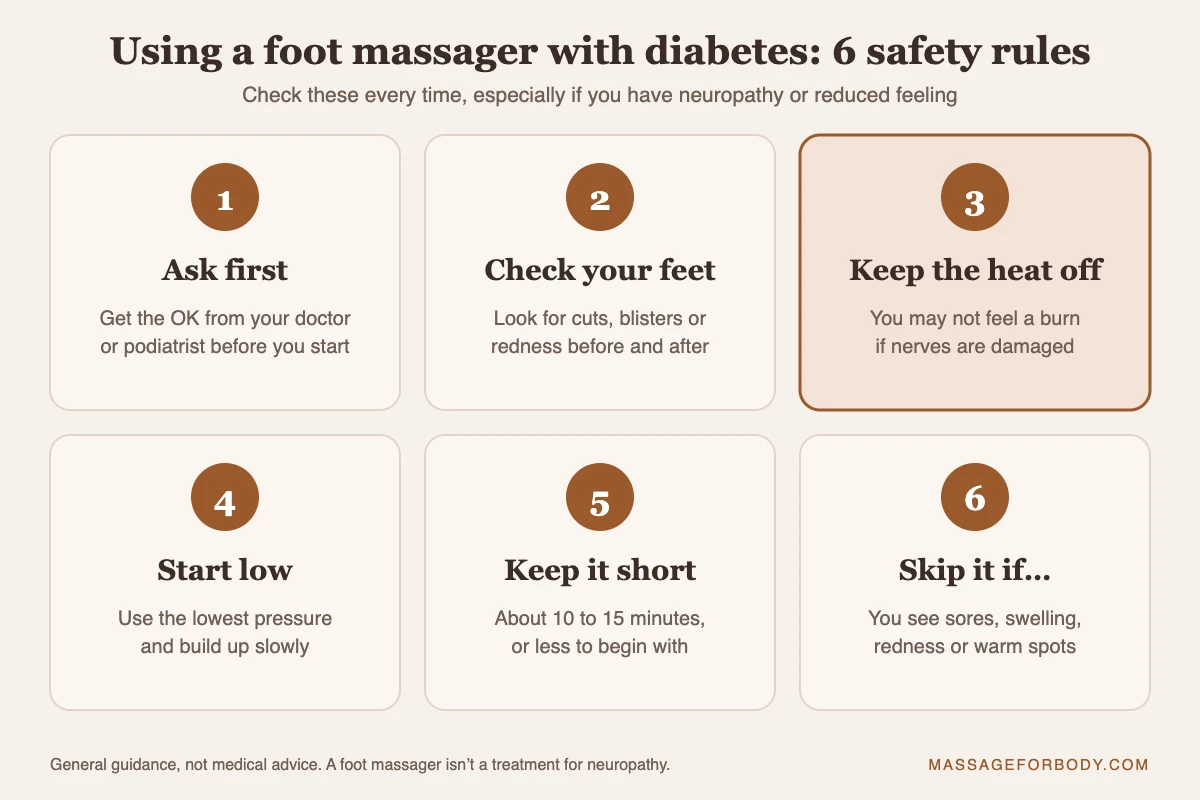
- Ask first: get the OK from your doctor or podiatrist, especially if you have neuropathy, poor circulation, a past foot ulcer or Charcot foot.
- Check your feet: look at the tops, soles and between your toes before and after every session. A mirror helps, or ask someone to look for you.
- Keep the heat off: nerve damage can stop you feeling a burn. The NIDDK and the American Diabetes Association advise against heating pads and hot water bottles on the feet for the same reason.
- Start low: use the lowest pressure and speed, and only increase it if it feels comfortable.
- Keep it short: about 10 to 15 minutes is plenty, and less when you’re starting out.
- Skip it if: you see a cut, blister, sore, redness, swelling or a warm spot. Call your doctor instead.
What a Foot Massager for Diabetics Can and Can’t Do for Neuropathy

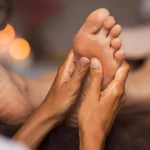
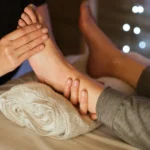
A massager can help tired feet and legs feel more relaxed and comfortable, which matters when you’re on your feet all day. There’s also some early research on hands-on massage. In one small 2015 trial of 60 adults with type 2 diabetes and neuropathy, a 30-minute Thai foot massage from a trained practitioner, three times a week for two weeks, improved balance and foot sensation compared with a control group.
That study used skilled hands-on massage, not a machine, and it was short and small. There’s no good evidence that a foot massager treats, reverses or prevents neuropathy, improves circulation enough to heal sores, or prevents ulcers. Managing your blood sugar, daily foot checks and regular foot exams are what protect your feet. For more on hands-on options, see our guides to massage for diabetics and the best type of massage for neuropathy.
Which Type of Foot Massager for Diabetics Is Best?
- Air compression: wraps squeeze and release without rollers. Usually the gentlest choice, and it covers the calves too. See our leg massagers for circulation guide for more.
- Shiatsu: rotating rollers knead the soles. It feels deeper, so it’s best for people who still have good feeling in their feet.
- Vibration: a vibrating footrest with no kneading. Light, simple and easy to control.
- EMS: mild electrical pulses make the muscles contract. Talk to your doctor first, and avoid it if you have a pacemaker or another implanted device.
New to using one? Our guide to how to use a foot massager walks you through the basics.
When to Skip the Massager and Call Your Doctor
- A cut, blister or sore that isn’t healing after a few days.
- Skin that’s red, warm, swollen or painful, which can be a sign of infection.
- A change in the shape or color of your foot, or skin that turns black.
- Swelling, pain, warmth or redness in one leg, which can be a sign of a blood clot. Get medical care right away.
- Calf pain when you walk that eases when you rest, which can be a sign of peripheral artery disease.
- Chest pain or sudden shortness of breath: call 911.
Frequently Asked Questions
Are foot massagers good for diabetics?
They can be, for comfort. A gentle foot massager for diabetics can help tired, achy feet feel more relaxed. But diabetes can damage nerves and blood vessels in the feet, so you may not feel if a massager is too hot or too strong. Ask your doctor or podiatrist first, keep the heat off, use low settings and check your feet before and after each session.
Can a foot massager help diabetic neuropathy?
A foot massager may help your feet feel more comfortable, but it isn’t a treatment for neuropathy and won’t repair nerve damage. One small 2015 trial found hands-on Thai foot massage improved balance and foot sensation over two weeks, but that was skilled massage, not a machine. Managing blood sugar, daily foot checks and regular foot exams remain the most important steps.
Should people with diabetes use a foot massager with heat?
It’s safest to keep the heat off, especially if you have neuropathy or reduced feeling. Nerve damage can stop you noticing a burn, which is why diabetes experts advise against heating pads and hot water bottles on the feet. Choose a model with a separate heat switch or no heat at all, and warm cold feet with socks instead.
Are compression leg massagers safe for diabetics?
For many people, gentle air compression is one of the safer options, because there are no rollers pressing into the feet and often no heat. Still, check with your doctor first, especially if you have peripheral artery disease, heart failure, swelling or a history of blood clots. Start on the lowest pressure, keep sessions short and check your skin for marks afterward.
What about EMS or TENS foot massagers?
EMS footpads use mild electrical pulses to make muscles contract, and some, like the Revitive Medic Coach, are FDA-cleared for circulation-related uses. None are cleared to treat neuropathy. Talk to your doctor before trying one, and avoid them if you have a pacemaker or another implanted device. Be wary of unbranded listings that promise to cure neuropathy.
How long should a diabetic use a foot massager?
Keep sessions short, about 10 to 15 minutes, and start with less until you know how your feet respond. Many massagers switch off automatically after 15 minutes. Check your feet afterward for redness, marks or blisters. If you notice any changes, stop using the massager and talk to your doctor or podiatrist before trying again.
When should I see a doctor instead of using a massager?
See your doctor promptly if you have a cut, blister or sore that isn’t healing, or skin that’s red, warm, swollen or painful. Get urgent care for swelling, pain, warmth or redness in one leg, which can signal a blood clot. Calf pain when walking that eases with rest can be a sign of peripheral artery disease and also needs a check.
The Bottom Line
For most people with diabetes, gentle air compression like the FIT KING Foot and Calf Air Massager is the safest foot massager for diabetics to start with, because it has no heat and no rollers. If you want kneading and your feet still have good feeling, the MIKO gives you five pressure levels and a separate heat switch. The Lifepro VibraFlow is a simple vibration option, and the Human Touch Reflex SOL is the premium foot and calf choice.
Whatever you choose, talk to your doctor or podiatrist first, keep the heat off and check your feet every day. A massager is for comfort, not a treatment for neuropathy.
References
- National Institute of Diabetes and Digestive and Kidney Diseases. Diabetes & Foot Problems.
- American Diabetes Association. Foot Complications.
- Centers for Disease Control and Prevention. Diabetes and Your Feet.
- Mayo Clinic. Diabetic neuropathy: symptoms and causes.
- Chatchawan U, Eungpinichpong W, Plandee P, Yamauchi J. Effects of Thai foot massage on balance performance in diabetic patients with peripheral neuropathy: a randomized parallel-controlled trial. Med Sci Monit Basic Res. 2015;21:68–75.
- U.S. Food and Drug Administration. 510(k) K210825: Revitive Medic Coach.
- Human Touch. Can I use a foot and calf massager if I have neuropathy or another medical condition?
- Centers for Disease Control and Prevention. About Venous Thromboembolism (Blood Clots).
Disclaimer:
This article is for general information only and is not a substitute for professional medical advice. If you have diabetes, talk to your doctor or podiatrist before using any foot or leg massager, especially if you have neuropathy, poor circulation, a foot ulcer or a history of blood clots. Never use a massager on broken skin, and seek medical care promptly for any foot wound or sign of infection.