You’ve just stepped off the massage table feeling loose, a little tender and maybe slightly spaced out. Deep tissue massage uses slower, firmer pressure than a relaxing massage, so what you do in the hours and days afterward can make a real difference to how you feel.
This guide covers what to do after a deep tissue massage, from the first hour to the next few days, including whether to use heat or ice, when you can work out again and the rare signs that point to something other than normal soreness. If you want to understand why massage can leave you sore in the first place, our guide to why you feel sore after a massage explains the reasons.
Quick Answer: What to Do After a Deep Tissue Massage
Get up slowly, drink a glass of water and take a short, easy walk. For the rest of the day, have a warm shower or bath, do some gentle stretching and skip hard workouts. Over the next one to three days, use heat on stiff areas and ease back into exercise. Mild soreness usually fades within about a day and a half; see a doctor if intense soreness lasts more than a couple of days.
Table of Contents
Your Deep Tissue Massage Recovery Timeline
Here’s a simple plan for the hours and days after your session.
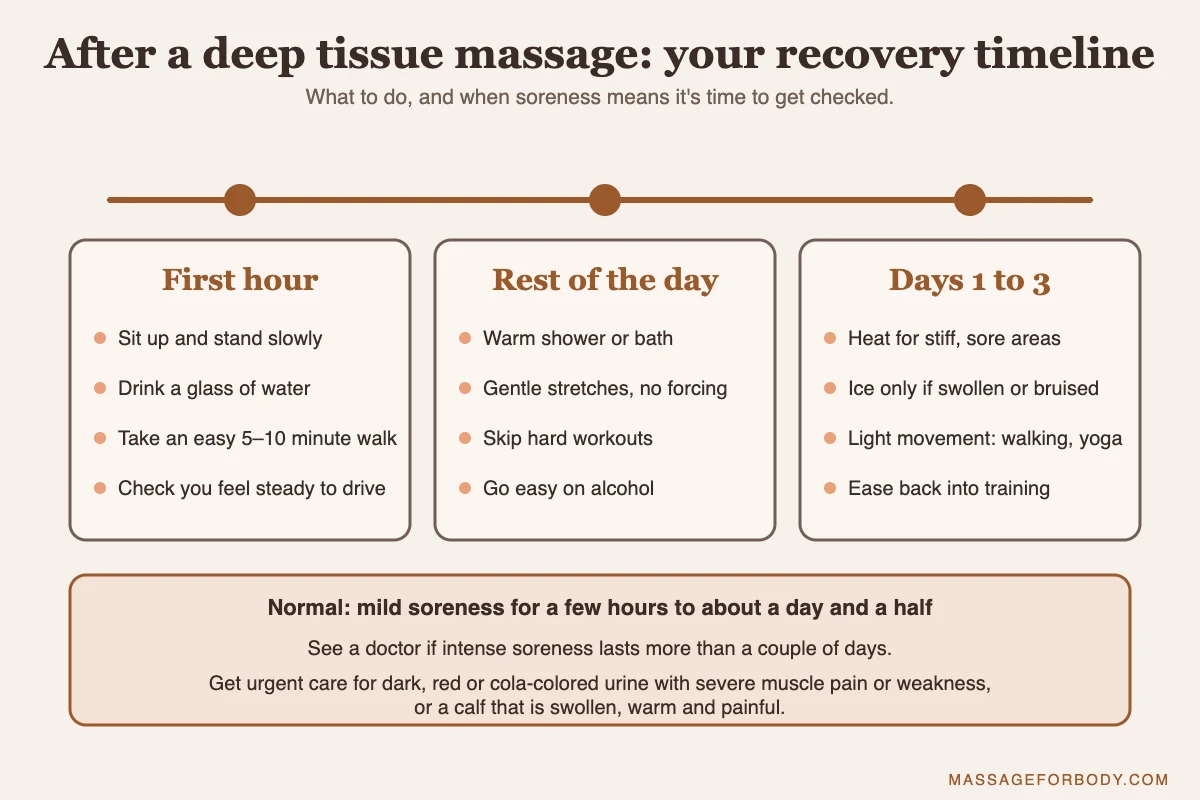
The first hour
- Get up slowly. Lying still for an hour can leave you lightheaded, so sit on the edge of the table for a moment before you stand.
- Drink a glass of water. Cleveland Clinic recommends drinking water before and after a massage. It won’t “flush toxins,” but it’s a sensible habit, especially if you tend to feel thirsty after a massage.
- Take a short walk. Five to ten minutes of easy walking can stop you from stiffening up on the drive home.
- Check you feel steady before driving. If you feel woozy, sit and rest for a few minutes. Our guide to feeling dizzy after a massage explains why it happens.
The rest of the day
- Have a warm shower or bath. Cleveland Clinic suggests a warm bath or hot shower, with Epsom salts if you like, to ease soreness.
- Stretch gently. Light stretches for the areas that were worked help keep them moving. Ease into each one and never force it.
- Skip hard workouts. Give your body a break from intense training or heavy lifting for the rest of the day.
- Eat normally and go easy on alcohol. A regular meal and plenty of fluids will serve you better than a big night out.
- Rest if you feel like it. Many people feel sleepy after deep work, and a nap or an early night is fine.
Days 1 to 3
- Use heat for stiffness. A heating pad or warm shower can relax lingering tight spots.
- Keep moving lightly. Cleveland Clinic notes that walking or gentle yoga may help you recover.
- Ease back into training. Return to your usual workouts once the soreness has mostly settled.
- Notice how you respond. Make a note of any areas that stayed sore so you can tell your therapist next time.

Heat or Ice After a Deep Tissue Massage?
For most people, heat is the better choice. Cleveland Clinic explains that heat increases blood flow and relaxes tight muscles, which suits the lingering stiffness and soreness that can follow deep work. Use a heating pad, warm compress or warm bath for up to 20 minutes at a time; for a bath, Cleveland Clinic suggests water around 92°F to 100°F (33°C to 38°C).
Ice is better for fresh swelling or inflammation. If an area looks puffy or bruised after your massage, wrap an ice pack in a cloth and apply it for 10 to 15 minutes, and never for more than 20. Remove a heating pad if it starts to feel too hot, and always keep a cloth between an ice pack and your skin.
Can You Work Out After a Deep Tissue Massage?
Light activity is fine and can even feel good. A walk, a gentle swim or an easy yoga class later the same day is unlikely to cause problems.
Save hard training for later. Cleveland Clinic advises avoiding intense workouts and strenuous activity while you recover. A good rule of thumb is to wait until the soreness from your massage has mostly faded, often within a day or two, before going back to heavy lifting, long runs or high-intensity sessions. If you have a big event coming up, book your deep tissue massage a few days beforehand rather than the day before. For more on timing massage around training, see our guide to massage after a workout.

How Long Does It Take to Recover From a Deep Tissue Massage?
Most people feel back to normal within a day or two. Massage therapist Victoria Bodner, quoted by Cleveland Clinic, says post-massage discomfort usually lasts from a few hours to about a day and a half. Deeper techniques, a first-ever deep tissue session or work on very tight areas can all make soreness more noticeable.
Soreness that feels like you’ve had a good workout is normal. Sharp pain, pain that keeps getting worse, or intense soreness that lasts more than a couple of days is not, and Cleveland Clinic advises seeing a healthcare provider in that case. If you often feel very sore for days, tell your therapist so they can adjust their pressure. Our guides to what to expect from a deep tissue massage and massage side effects have more detail.

Do You Need to Drink Water to Flush Toxins?
Drinking water after a massage is a good habit, but not for the reason you often hear. There’s no good evidence that massage releases a wave of “toxins” that need flushing out. Your liver and kidneys clear waste around the clock, with or without a massage.
That said, staying hydrated helps you feel your best, and some people simply feel thirsty after an hour in a warm room. Have a glass or two of water and then follow your thirst. We look at the myth more closely in our article on what toxins are released after a massage.

What to Avoid in the First 24 Hours
- Intense exercise or heavy lifting.
- Saunas, hot tubs or very hot baths if you feel lightheaded. Heat can make dizziness worse, so a warm rather than hot bath is a gentler option.
- Heavy drinking. Alcohol can leave you dehydrated and make it harder to tell how your body is really feeling.
- Booking another deep session straight away. Give sore areas time to settle first.
- Ignoring unusual symptoms. Normal soreness feels dull and gradually fades. Anything sharp, spreading or getting worse deserves attention.
Signs It’s Not Normal Soreness
Serious problems after massage are rare. The National Center for Complementary and Integrative Health (NCCIH) says the overall risk appears low, but there have been rare reports of serious side effects such as a blood clot, nerve injury or bone fracture, and some involved vigorous techniques like deep tissue massage.
Get medical help right away if you notice:
- dark, red or cola-colored urine, especially with severe muscle pain, weakness or passing less urine than usual. MedlinePlus lists these among the symptoms of rhabdomyolysis, a rare but serious breakdown of muscle tissue
- a calf or leg that is swollen, warm and painful
- chest pain or sudden shortness of breath (call 911)
- numbness, tingling or weakness that doesn’t go away
- severe pain, a large or spreading bruise, or swelling that keeps increasing
If you take blood thinners, have a bleeding or clotting disorder or osteoporosis, or have recently had surgery, check with your doctor before booking deep pressure work, and always tell your therapist about your health history.
How Soon Can You Get Another Deep Tissue Massage?
Wait until the soreness from your last session has fully settled, which usually takes at least a few days. After that, how often you book depends on your goals, your budget and how your body responds. If you’re working on a specific problem, your therapist may suggest closer sessions at first and then spacing them out. Our guide to how often to get a deep tissue massage goes into more detail.
Frequently Asked Questions
Should I shower after a deep tissue massage?
Yes, a warm shower is a good idea after a deep tissue massage. It rinses off massage oil, and the warmth can help relax sore muscles. Cleveland Clinic suggests a warm bath or hot shower to ease soreness. Wait until you feel steady on your feet, keep the water warm rather than scalding, and sit down if you feel lightheaded.
Is it normal to feel sore after a deep tissue massage?
Yes. Mild soreness that feels like you’ve had a workout is common, especially after your first deep tissue session or when a therapist works on very tight areas. It usually lasts from a few hours to about a day and a half. Heat, gentle movement and rest help. See a doctor if intense soreness lasts more than a couple of days or keeps getting worse.
Can I sleep after a deep tissue massage?
Yes. Feeling sleepy after a deep tissue massage is common, and a nap or an early night is a perfectly good way to recover. Just make sure you feel alert before driving home. When you wake up, get up slowly and have a glass of water, since lying still for a long time can leave you feeling a little lightheaded.
Should I use heat or ice after a deep tissue massage?
Heat is usually best for the stiffness and soreness that can follow deep tissue work, because it boosts blood flow and relaxes tight muscles. Use a heating pad or warm bath for up to 20 minutes at a time. Choose ice instead if an area looks swollen or bruised, wrapping the pack in a cloth and limiting it to 10 to 15 minutes.
Can I drink alcohol after a deep tissue massage?
It’s best to skip alcohol or keep it light on the day of your massage. Alcohol can dehydrate you, may make lightheadedness or tiredness worse, and can mask how your body is really responding to the session. Stick with water or other non-alcoholic drinks for the rest of the day, and save that glass of wine for another evening.
What should I not do after a deep tissue massage?
Avoid intense workouts, heavy lifting and long, very hot soaks or saunas, especially if you feel lightheaded. Go easy on alcohol, and don’t book another deep session until the soreness has settled. Most importantly, don’t ignore unusual symptoms such as severe pain, spreading bruises, dark urine or a swollen, painful calf. These need medical attention rather than more rest.
The Bottom Line
Knowing what to do after a deep tissue massage helps you get the most from it. Take the first hour slowly with water and a short walk, spend the rest of the day on warm showers, gentle stretches and rest, and use heat and light movement over the next few days. Mild soreness that fades within a day or two is normal.
Anything more intense, longer-lasting or unusual is worth checking with a doctor. For more recovery tips, browse our recovery and relief guides or read our general guide on what to do after any massage.
References
- Cleveland Clinic. Why Does My Body Feel Worse After a Massage?
- Cleveland Clinic. Ice vs. Heat: What Is Best for Your Pain?
- National Center for Complementary and Integrative Health. Massage Therapy: What You Need To Know.
- MedlinePlus Medical Encyclopedia. Rhabdomyolysis.
Disclaimer:
This article is for general information only and is not a substitute for professional medical advice, diagnosis or treatment. See a doctor if soreness after a massage is severe or lasts more than a couple of days, and seek urgent care for dark urine with muscle pain or weakness, a swollen and painful calf, chest pain or trouble breathing.