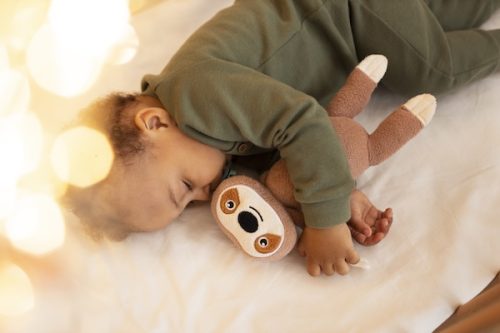
Bedtime with a toddler can go one of two ways: a slow wind-down, or a second wind at 7:30pm. Massage will not fix every hard night, but it is one of the few things you can add to a bedtime routine that costs nothing, takes ten minutes, and tells your child the day is over.
This guide covers the exact routine, which oils are safe, when to skip it altogether, and what to do about a toddler who has no intention of lying down. For the wider picture of massage for children of all ages, see our guide to pediatric massage.
😴 Quick Answer: How to Massage a Toddler to Sleep
To massage a toddler to sleep, work in a warm room after their bath and use a little plain carrier oil warmed in your hands. Spend about ten minutes on feet, legs, tummy, chest, arms and back using slow, firm strokes, and finish the same way every night so it becomes a sleep cue. Stop if your toddler wriggles away or says no.
Table of Contents
Does Massage Actually Help Toddlers Sleep?
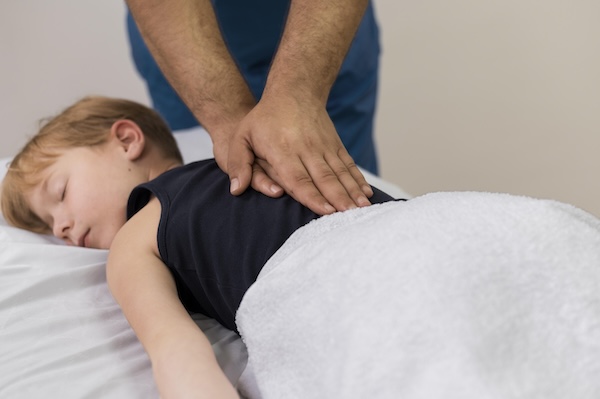
The evidence is encouraging rather than conclusive. A Cochrane review of nine studies covering 598 infants found that massaged babies cried less, slept better, and had lower levels of the stress hormone cortisol, with a possible effect on melatonin release. The reviewers noted that several findings came from single studies and needed further verification, but the direction was consistent.
Two effects are worth separating. The first is the touch itself: slow, predictable pressure helps the nervous system shift out of alert mode. The second, and probably the bigger one for toddlers, is the routine. A repeated sequence of bath, pyjamas, massage, story, lights out teaches your child’s body what is coming next. Sleep researchers consistently find that predictable bedtime routines help children fall asleep faster and wake less overnight.
So massage is a useful part of a wind-down. It is not a fix for a sleep regression, teething, or a toddler who was already overtired at 6pm.
When Should You Massage Your Toddler, and When Should You Skip It?
The best window is after a warm bath, 20 to 30 minutes before you want them asleep. Body temperature drops after a bath, and that drop already primes the body for sleep, so massage extends the window instead of competing with it.
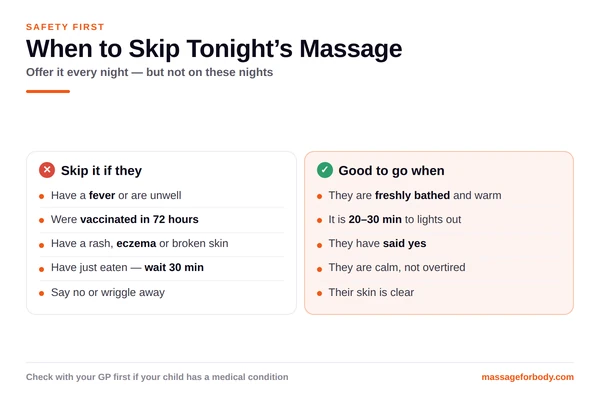
Skip it tonight if your toddler:
- has a fever or is unwell
- was vaccinated in the last 72 hours (Children’s Hospital of Philadelphia advises against massage in that window)
- has broken skin, a rash, an eczema flare, sunburn or a fresh injury in the area
- has just eaten a full meal, in which case wait 30 to 45 minutes
- says no, wriggles away, or arches their back
That last one matters most. A massage a toddler does not want is not relaxing for anyone. Offer it, and if tonight is a no, try again tomorrow.
If your child has a medical condition, has had recent surgery, or has a diagnosed muscle or joint issue, check with your GP or paediatrician first.
What Oil Should You Use for Toddler Massage?
A plain, fragrance-free carrier oil such as grapeseed, sunflower or fractionated coconut oil is all you need. A fragrance-free moisturiser works equally well and is often kinder to eczema-prone skin. Whatever your child’s skin already tolerates is the safest choice.
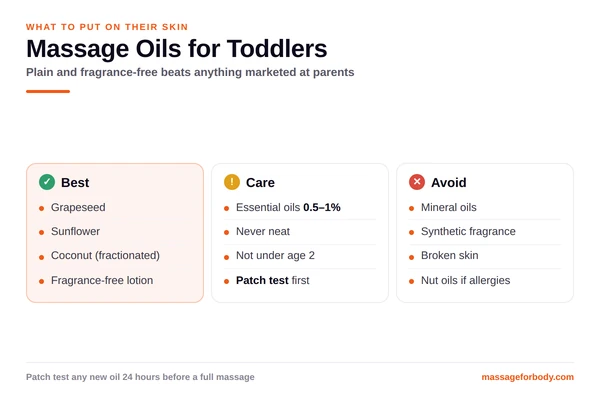
You will also want a towel, a warm room (toddlers lose heat fast with clothes off), and ten uninterrupted minutes.
On essential oils: you do not need them, and they are the easiest thing to get wrong. If you use them, dilute heavily in a carrier oil, around 0.5 to 1% for young children, never apply them neat, and do not use them on children under two without professional advice. Patch test any new oil on a small area of the forearm 24 hours beforehand. Skip mineral and petroleum-based oils, and anything with synthetic fragrance.
How to Massage a Toddler to Sleep: The 10-Minute Bedtime Routine
Warm the oil between your palms first, because cold hands undo the mood in about half a second. Work slowly: roughly six seconds per stroke, slower than feels natural.
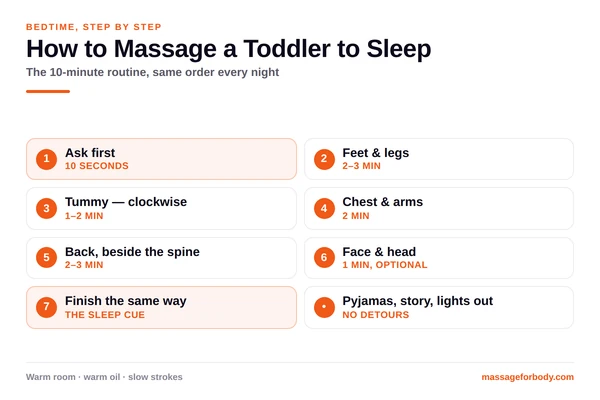
1. Ask first (10 seconds). Show them your hands and say “massage time?” It sounds unnecessary with a two-year-old, but asking every time builds the habit of consent and gives them a way to decline.
2. Feet and legs (2 to 3 minutes). Start here. It is the least invasive place to begin and often the most calming. Hold one foot and stroke your thumb from heel to toes, then circle gently around the sole. Move up the leg with long, smooth strokes from ankle to thigh, using a light milking motion with your whole hand. Repeat on the other side. Plenty of toddlers settle at the feet alone, which is why foot reflexology is so often recommended for children’s sleep, though the calming effect comes from the slow, firm contact rather than any specific pressure point.
3. Tummy (1 to 2 minutes). With flat fingers, make slow clockwise circles around the belly button, following the direction of the digestive tract. Keep the pressure light, about what you would use to spread butter on fresh bread. Skip this step if their tummy is full or sore. The same motion is used for trapped wind and constipation in younger children.
4. Chest and arms (2 minutes). Place both hands flat in the centre of the chest and stroke outwards toward the shoulders, like smoothing the pages of an open book. Then take each arm and use the same long strokes from wrist to shoulder.
5. Back (2 to 3 minutes). Roll them onto their front, or let them lie against your chest. Use long strokes from shoulders down to the bottom, then small fingertip circles either side of the spine. Never press directly down on the spine itself. Work the soft muscle on either side of it.
6. Face and head (1 minute, optional). Very light fingertip circles at the temples and along the jaw. Avoid the eyes, ears and nose. Some toddlers love this, some hate it, so read the room.
7. Finish clearly. Rest both hands still on their back for a few seconds, then say the same thing you say every night: “all done, time for sleep.” That consistent ending is what turns the massage into a sleep cue.
Then straight into pyjamas, story, lights out. Do not break the spell with a snack, a screen, or a lap of the hallway.
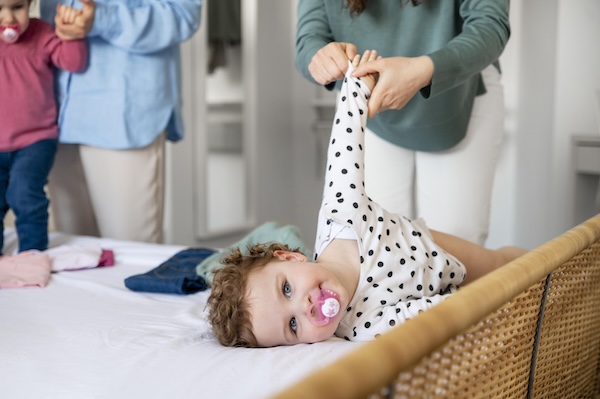
How Do You Know If It Is Working?
Massage should be a conversation, not a procedure.
Signs it is working: slower breathing, heavy limbs, yawning, eye contact softening, head lolling.
Signs to stop or change: squirming, stiffening, pulling a limb away, turning the head, or getting giggly and wound up rather than sleepy.
If they get silly instead of sleepy, the pressure is usually too light, which reads as ticklish rather than soothing. Try firmer, slower strokes with your whole palm instead of your fingertips.
What If Your Toddler Will Not Lie Still?
Nobody warns you that toddlers do not lie down on command. This is the single most common reason parents give up, and it is fixable.
- Let them stand. A back and shoulder massage works fine on a toddler standing between your knees.
- Keep the clothes on. A massage over pyjamas is still a massage.
- Do it during the story. Rub their back with one hand while you read with the other.
- Start with 90 seconds. Feet only. Build up over a few weeks.
- Let them massage a teddy first. Copying is often the way in.
- Give them a choice. “Feet or back first?” A toddler who picks is a toddler who participates.
How Long Before You See a Difference?
Give it two weeks of consistency before you judge it. The calming effect of the touch is often immediate, but the part that really moves the needle, your toddler’s body recognising this as the signal for sleep, is built by repetition. Same order, same time, same words at the end.
Some nights it works beautifully. Some nights they are up at 2am anyway. That is toddlers, not a failure of technique.
Frequently Asked Questions
How often should I massage my toddler to help them sleep?
Nightly is ideal, because the routine does as much work as the massage. Ten to fifteen minutes is plenty. If your toddler is enjoying it, follow their lead, but stop before they get restless so it stays something they look forward to.
What age can I start massaging my toddler?
There is no lower limit for a toddler. Gentle massage is used from the newborn stage onward, and our guide on when to start baby massage covers the early months. What changes with age is participation: a two-year-old will want to help and decide which foot goes first.
Is it safe to massage a toddler who is too young to understand what is happening?
Yes, with the usual conditions: gentle pressure, no sore or broken skin, a warm room, and stopping the moment they signal they have had enough. Ask before you start even before they can answer, because it teaches them that touch is something they get a say in.
Which massage techniques are best for toddler sleep?
Long, slow, rhythmic strokes over the back, legs and feet do most of the work, and foot massage is the easiest entry point with a reluctant toddler. Fast, percussive or deep-pressure techniques used in adult sports massage are not appropriate for young children. Our guide to pediatric massage techniques covers how the approach changes as your child grows.
Can I use lotion instead of massage oil?
Yes. A plain, fragrance-free moisturiser is fine and can be easier on dry or eczema-prone skin.
Should I massage my toddler if they wake in the night?
A brief back rub can help resettle them, but keep it short, dark and boring. A full massage at 2am risks waking them properly.
Where should I not massage a toddler?
Avoid pressing directly on the spine, and avoid the eyes, ears, nose and any broken or irritated skin. Everything else is fair game at gentle pressure.

The Bottom Line
Warm room, warm oil, warm hands. Start at the feet. Slow strokes, light pressure, the same order every night, and a clear ending. Stop when they have had enough. Give it two weeks before you decide whether it works for your child.
It is ten minutes that reliably ends the day on contact rather than conflict, which is worth something even on the nights they still do not sleep.
📚 References
- Underdown A. et al., Massage intervention for promoting mental and physical health in infants aged under six months, Cochrane Database of S ystematic Reviews – University of Warwick
- Children’s Hospital of Philadelphia – Tools to Help with Sleep: Massage
- Sleep Foundation – Perfecting Your Child’s Bedtime Routine
- American Academy of Pediatrics – Healthy Sleep Habits: How Many Hours Does Your Child Need?
⚠️ Disclaimer:
This article is for general informational purposes only and is not a substitute for professional medical advice, diagnosis or treatment. Speak with your GP, paediatrician, child and family health nurse or another qualified healthcare professional if you have concerns about your child’s sleep, skin or general health. Stop the massage if your toddler appears uncomfortable or unwell, and seek urgent medical care for serious or worsening symptoms.
About The Author