Nipple massage is slow, gentle touch around the nipples and areolas, done on your own or with a partner, to relax, explore what feels good and add closeness to intimacy. The basics are simple: warm hands, a little massage oil, light pressure to start and plenty of checking in.
Nipples are one of the most sensitive parts of the body, and how they respond varies a lot from person to person, and even from day to day. This guide walks you through how to prepare, a step-by-step routine you can adapt, how to find the right pressure, and when to skip it or check in with a doctor.
💗 Quick Answer: How to Do a Nipple Massage
Start with warm, clean hands and a few drops of unscented massage oil. Begin with slow strokes over the whole chest, then circle the areola lightly before touching the nipple itself. Build pressure gradually, keep checking in, and stop if anything feels sore. Skip it if you’re pregnant without your provider’s okay, have cracked skin, or notice new nipple discharge.
Table of Contents
What Is Nipple Massage?
Nipple massage means using your fingertips, palms or a soft touch to stroke the nipples and the surrounding areola in a slow, deliberate way. People enjoy it as part of nipple play with a partner, as solo self-exploration, or simply as a way to relax. It’s for every body: men’s nipples have plenty of nerve endings too.
This guide focuses on nipple massage for pleasure and connection. If you’re looking for breast massage for breastfeeding or general breast care, see our guides to breast massage techniques and breast massage for clogged ducts.
Why Does Nipple Massage Feel Good?
The nipple and areola are packed with nerve endings, which is why light touch there can feel so intense. In a survey of young adults published in The Journal of Sexual Medicine, about 82% of women and 52% of men said nipple or breast stimulation caused or increased their sexual arousal, while only 7–8% said it lowered it.
Brain imaging helps explain why. In a small fMRI study, women’s nipple self-stimulation activated the same area of the brain’s sensory cortex that responds to genital touch (Komisaruk and colleagues, 2011).
That said, nipple pleasure is very individual. Not everyone enjoys nipple touch, and sensitivity shifts with hormones, the menstrual cycle, pregnancy and breastfeeding. Treat every session as a conversation rather than a formula.
How Do You Prepare for a Nipple Massage?
- Talk first: If you’re with a partner, agree on what you’re both comfortable with and how you’ll signal “more,” “less” or “stop.”
- Clean hands, short nails: Wash your hands and smooth any sharp edges. Nipple skin is thin and scratches easily.
- Warm your hands: Rub your palms together for a few seconds so the first touch isn’t a shock.
- Set a comfortable scene: A warm room, soft lighting and no time pressure help your body relax.

How to Do a Nipple Massage, Step by Step
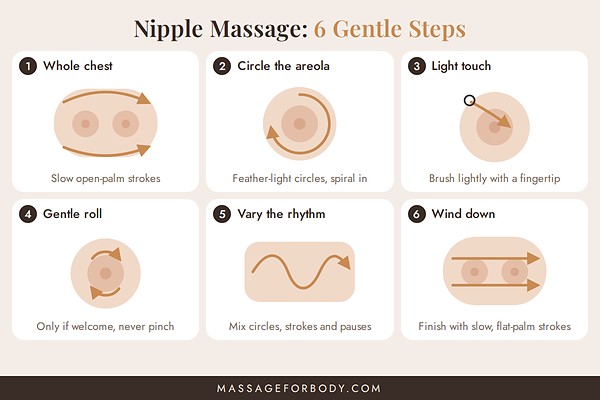
1. Start with the whole chest
Begin with slow, open-palm strokes across the chest, sides and upper breasts. This warms the skin and lets sensation build gradually instead of all at once.
2. Circle the areola
Using one or two fingertips, trace slow circles around the outer edge of the areola. Keep the touch feather-light and gradually spiral inward.
3. Add light touch to the nipple
Once the area feels warm and relaxed, lightly brush the nipple with a fingertip or the flat of your palm. Many people prefer indirect, glancing touch at first.
4. Try gentle rolling
If it’s welcome, hold the nipple lightly between your thumb and index finger and roll it slowly, like turning a small dial. Keep it gentle: this should never pinch or hurt.
5. Vary the rhythm
Alternate slow circles, light strokes and short pauses. Changing pace and pressure keeps the sensation interesting and helps you notice what feels best.
6. Check in and wind down
Ask, or notice, what’s working, and finish with a few slow, flat-palm strokes over the chest. Ending gently keeps the moment unhurried.

How Much Pressure Should You Use?
Start lighter than you think. Nipples can go from pleasant to uncomfortable quickly, and the same pressure can feel different from one day to the next. A simple 1-to-10 check-in works well: find the number that feels best and adjust from there.
Sensitivity often rises before a period, during pregnancy and while breastfeeding, and some people simply prefer very light touch all the time. If touch starts to feel sore, tender or raw, ease off or move to another area.
Can You Massage Your Own Nipples?
Yes. Self-massage is a low-pressure way to learn what you like, which also makes it easier to tell a partner. Use the same steps: warm hands, a little oil, whole-chest strokes first, then light circles around the areola. Take your time and notice how different strokes, speeds and pressures feel.
Many people pair it with other relaxing touch. For more ideas, see our guides to clitoral massage techniques and vulva massage for body awareness.

How Do You Give a Partner a Nipple Massage?
With a partner, nipple play works best when it’s slow and responsive. Start with a relaxing back or shoulder massage, move to the chest only once you’ve both agreed, and keep checking in with simple questions like “softer or firmer?” Silence isn’t the same as a yes, so pause if you’re not sure.
For more on setting the mood, see our guides on how to massage a woman and how to give a romantic massage.
When Should You Avoid Nipple Massage?
- During pregnancy, unless your provider says it’s okay: Nipple stimulation releases oxytocin, which can trigger contractions. Cleveland Clinic advises that it may not be safe, especially in high-risk or preterm pregnancies, so talk to your obstetric provider first. See also our guide to massage during pregnancy.
- Cracked, sore or broken skin: Including sore nipples from breastfeeding. Let the skin heal first.
- A new or healing piercing: Avoid touching it until it has fully healed.
- Signs of infection: Such as redness, warmth, swelling, pus or a fever.
- New nipple discharge: Mayo Clinic advises avoiding squeezing or massaging your nipples while you wait to have discharge checked, because handling them can keep it going.
When Should You See a Doctor?
This kind of touch isn’t a way to check for breast problems, but it can make you more aware of changes. Make an appointment with a health care professional if you notice:
- New nipple discharge, especially if it’s bloody or clear, comes from one breast or happens on its own (any nipple discharge in men should be checked)
- A nipple that has newly flattened or turned inward
- A new lump in the breast or underarm
- Skin changes on the nipple or breast, such as dimpling, an orange-peel texture, scaling, crusting, flaking or a change in color
- Pain or tenderness that doesn’t go away
Mayo Clinic advises getting any breast change checked rather than waiting for your next mammogram, even if your last one was normal.
Want to explore further? Our intimate wellness guides bring every related article together in one place.
Frequently Asked Questions
Is nipple massage safe?
For most people, yes. It’s gentle touch, so the main risks are soreness or irritation from too much pressure, dry friction or sharp nails. Use clean hands, a little unscented oil and light pressure, and skip it if the skin is cracked, infected or newly pierced, or if you’re pregnant and your provider hasn’t said it’s okay.
Can nipple massage induce labor?
Nipple stimulation can trigger contractions because it releases oxytocin, the same hormone involved in labor. Cleveland Clinic notes it may not be safe, especially in high-risk or preterm pregnancies, because the uterus can be overstimulated. Don’t try it to start labor on your own; talk to your obstetric provider first.
Do men enjoy nipple massage?
Many do. In a survey published in The Journal of Sexual Medicine, about half of young men said nipple stimulation caused or increased their arousal. Men’s nipples have plenty of nerve endings, so the same slow, light approach works well. As with anyone, preferences vary, so ask and adjust.
Can you orgasm from nipple massage?
Some people say they can reach orgasm from nipple stimulation alone, though it’s less common and research on it is limited. A small brain-imaging study found that nipple stimulation activates the same sensory area of the brain as genital touch, which may help explain why. For most people, nipple play simply adds to arousal, and that’s completely normal too.
What’s the best oil for nipple massage?
A light, unscented oil such as jojoba, grapeseed or sweet almond works well, or you can use a gentle unscented lotion. Warm a few drops between your hands first. Skip scented, menthol or “warming” products on sensitive skin, avoid nut oils if there’s a nut allergy, and patch-test anything new on your inner arm first.
Why are my nipples so sensitive?
Nipples have a high concentration of nerve endings, and their sensitivity changes with hormones. Many people notice more tenderness before their period, during pregnancy and while breastfeeding. If sensitivity comes with pain, a lump, discharge or skin changes, or doesn’t settle down, check in with a health care professional.
Can nipple massage help with breastfeeding?
This guide covers nipple massage for pleasure. Breast massage for breastfeeding is different: it focuses on comfort and milk flow rather than the nipple itself. See our guides to breast massage for clogged ducts and general breast massage techniques, and talk to a lactation consultant or your doctor if feeding is painful.
The Bottom Line
Nipple massage is about going slowly, starting light and paying attention to what feels good, whether you’re exploring on your own or with a partner. Warm hands, a little unscented oil and honest communication matter far more than any particular technique. Skip it when the skin is sore or you’re pregnant without your provider’s okay, and get any new nipple or breast changes checked.
References
- Levin R, Meston C. Nipple/breast stimulation and sexual arousal in young men and women. J Sex Med. 2006;3(3):450–454.
- Komisaruk BR, Wise N, Frangos E, et al. Women’s clitoris, vagina and cervix mapped on the sensory cortex: fMRI evidence. J Sex Med. 2011;8(10):2822–2830.
- Cleveland Clinic. Pumping and nipple stimulation to induce labor.
- Mayo Clinic. Nipple discharge: When to see a doctor.
- Mayo Clinic. Breast cancer: Symptoms and causes.
⚠️ Disclaimer:
This article is for general informational purposes only and is not a substitute for professional medical advice. If you have questions about breast or nipple changes, pregnancy or sexual health, talk to a qualified health care provider.