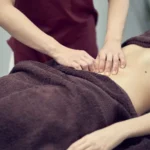
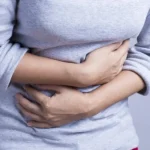
That tight, overfull feeling after a big meal or a fizzy drink is uncomfortable, and it can last for hours. A gentle stomach massage for bloating is a simple, free way to help trapped gas move along and ease the pressure.
Below you’ll find the I-L-U massage, a routine used by physical therapists that follows the path of your large intestine, plus everyday habits that reduce gas and the signs that bloating needs a doctor rather than a massage.
Quick Answer: How to Massage Gas Out of Your Stomach
Lie on your back with your knees bent and use your fingertips to stroke in a clockwise pattern: down your left side (I), across under your ribs and down (L), then up your right side, across and down (U). Use gentle to moderate pressure for 5 to 10 minutes, then try knees-to-chest or a short walk. See a doctor if bloating lasts two weeks or comes with pain, weight loss or blood in your stool.
Table of Contents
Does Stomach Massage Help With Gas and Bloating?
It can help you feel more comfortable. Abdominal massage has the strongest evidence for constipation: a 2025 review of 25 randomized trials with more than 1,500 people found it eased constipation symptoms and pain and increased bowel movements. Because constipation is a common cause of gas and bloating, that is encouraging.
Research on bloating by itself is thinner, so think of stomach massage for bloating as a comfort measure rather than a treatment. Slow, rhythmic strokes can relax tense belly muscles and may help gas move along, but they won’t fix the cause if bloating keeps coming back.
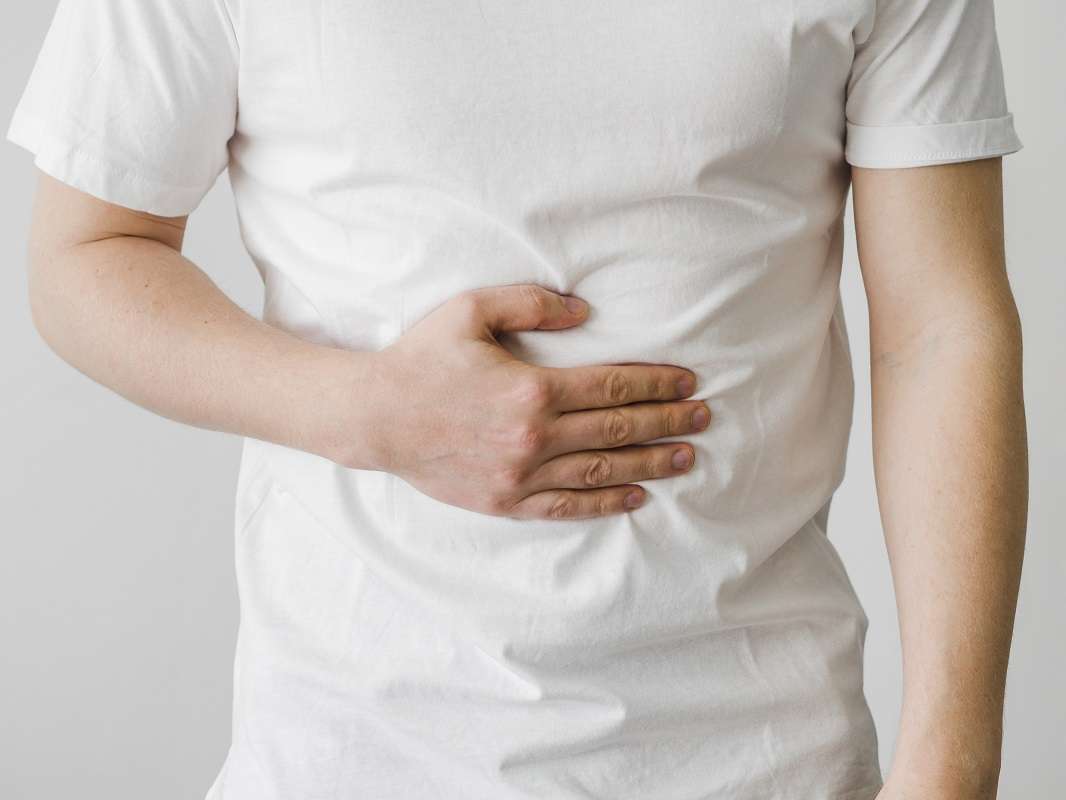
What Causes Gas and Bloating?
According to the National Institute of Diabetes and Digestive and Kidney Diseases (NIDDK), gas mostly comes from two sources:
- Swallowed air, from eating or drinking quickly, chewing gum, sucking hard candy, fizzy drinks, smoking or loose dentures.
- Gut bacteria breaking down carbohydrates that weren’t fully digested, such as beans, lentils, broccoli, cabbage, some fruits, dairy (if you’re lactose intolerant) and sugar-free sweeteners ending in “-ol.”
Passing gas is normal: most people do it 8 to 14 times a day, and up to 25 times is still considered normal. Conditions such as irritable bowel syndrome (IBS), constipation, lactose intolerance and celiac disease can make gas and bloating worse.
If bloating tends to arrive with period cramps, our guide to massage during your period has a gentle belly and lower-back routine, and you can learn more about belly button massage too.
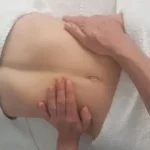
How to Do the I-L-U Stomach Massage
This routine is adapted from a patient handout from Beth Israel Deaconess Medical Center in Boston. It moves in the same direction as your large intestine, which runs up your right side, across under your ribs and down your left side.
- Get comfortable. Lie on your back on a bed or the floor with your knees bent and feet flat. Bent knees relax your stomach muscles. A warm drink beforehand can help.
- Warm up. Rest your hands on your belly and make slow, gentle clockwise circles around your belly button for about 30 seconds.
- I stroke: with flat fingers, stroke down your left side from just under your ribs to the front of your hip bone. Repeat about 10 times.
- L stroke: start under your right ribs, stroke across to your left ribs, then down your left side to your hip. Repeat about 10 times.
- U stroke: start low on your right side near the hip bone, stroke up to your ribs, across to the left and down to your left hip. Repeat about 10 times.
- Finish with a minute of small clockwise circles about two to three inches out from your belly button.
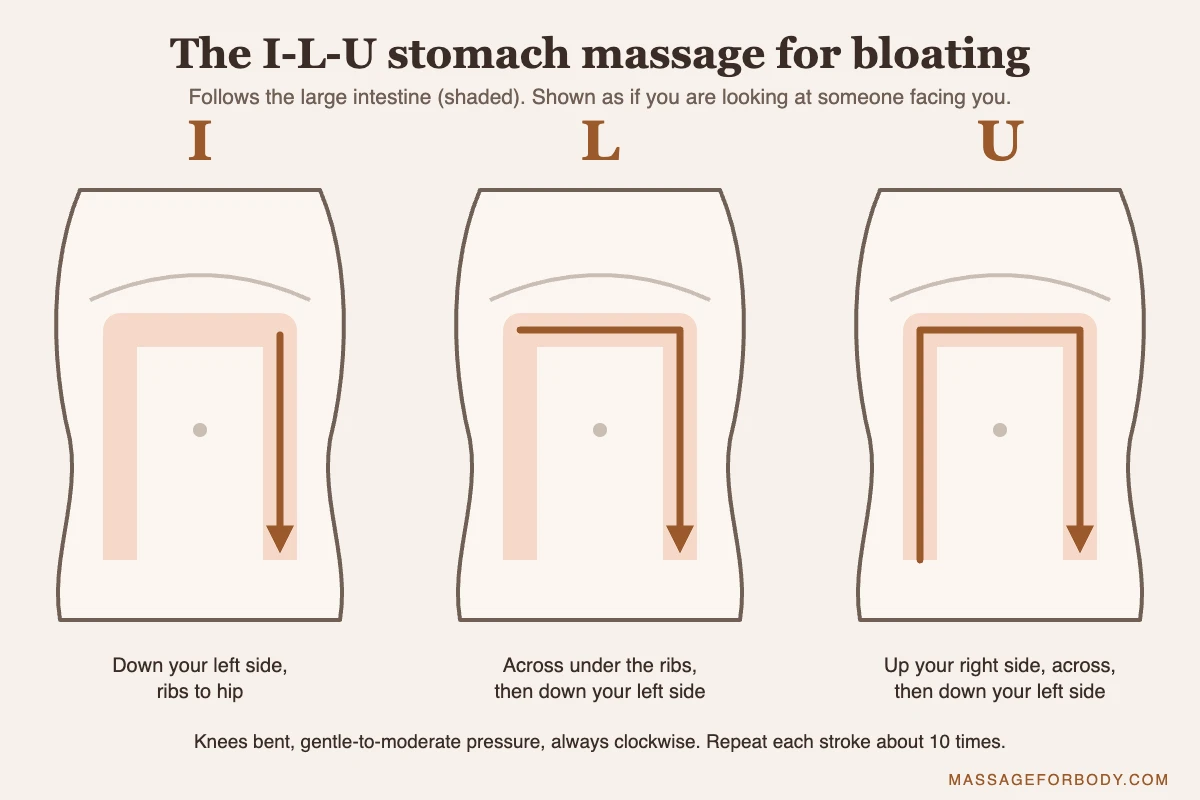
Use gentle to moderate pressure, firm enough to feel but never painful, and always move clockwise. The whole stomach massage takes 5 to 10 minutes, and you can repeat it once or twice a day. Many people find it works best in the morning or 30 to 60 minutes after a meal rather than straight after eating.
Our guide to abdominal massage covers the broader technique if you’d like to go further.
Extra Moves That Help Gas Move
- Knees to chest: lying on your back, hug both knees toward your chest and hold for 20 to 30 seconds, rocking gently.
- Gentle supine twist: with knees bent, let them drop slowly to one side, hold for a few breaths, then switch.
- A short walk: 10 to 15 minutes of easy walking after a meal helps keep things moving.

Everyday Habits That Reduce Gas
Massage helps in the moment, but these NIDDK-recommended changes tackle the cause:
- eat slowly, sitting down, and avoid talking while you chew
- cut back on gum, hard candy, fizzy drinks and drinking through straws
- eat smaller meals more often
- keep a food diary to spot your trigger foods
- talk to your doctor or a registered dietitian before trying a special diet such as low-FODMAP

Who Shouldn’t Do Stomach Massage?
Skip it, or check with your doctor first, if you:
- are pregnant (ask your provider before doing abdominal massage)
- have had abdominal surgery recently or have a hernia
- have sudden, severe or worsening stomach pain
- have an inflammatory bowel disease flare, such as Crohn’s disease or ulcerative colitis
- might have a bowel blockage (severe pain, swelling and being unable to pass gas or stool)
If you’re looking for help for a little one, see our separate guide to baby massage for gas, which uses much gentler techniques.
When Does Bloating Need a Doctor?
Occasional bloating is common and usually harmless. Mayo Clinic advises seeing a doctor if gas or bloating is so persistent or severe that it affects daily life, or comes with:
- blood in your stool
- changes in your stools or how often you go
- unexplained weight loss
- constipation or diarrhea
- nausea or vomiting that keeps coming back
Get medical care right away for prolonged abdominal pain or chest pain. For women, the CDC lists bloating, feeling full quickly, pelvic or belly pain and needing to urinate more often as possible signs of ovarian cancer, and advises seeing a doctor if any of these last two weeks or longer and aren’t normal for you.

Frequently Asked Questions
How long does it take for stomach massage to relieve gas?
Some people feel relief within a few minutes, often by passing gas or burping during or soon after the massage. For others it takes a little longer. Try the full I-L-U routine for 5 to 10 minutes, then get up and walk for a few minutes. If massage never helps, talk to your doctor about what’s causing the bloating.
Which direction should you massage your stomach for gas?
Always clockwise when you look down at your own belly. That means up your right side, across under your ribs and down your left side, following the direction your large intestine moves its contents. Massaging the other way isn’t dangerous, but clockwise strokes work with your digestive system rather than against it.
Can I massage my stomach after eating?
It’s best to wait 30 to 60 minutes after a large meal. Pressing on a very full stomach can feel uncomfortable and may cause reflux. A short, easy walk is a better choice straight after eating, and you can do the I-L-U stomach massage once things have settled a little.
Is stomach massage safe during pregnancy?
Ask your obstetrician or midwife before doing abdominal massage while pregnant. Light, soothing strokes on the skin are usually fine, but firm pressure on the belly isn’t recommended. If bloating in pregnancy comes with pain, bleeding, fever or vomiting, contact your provider straight away rather than trying massage.
How often can I do a stomach massage for bloating?
Once or twice a day is plenty. Many people find a morning session helps most, especially if constipation is part of the problem. Keep each session to about 5 to 10 minutes with gentle to moderate pressure. If you find you need it every day for weeks, see your doctor to look for an underlying cause.
The Bottom Line
A gentle stomach massage for bloating, following the clockwise I-L-U path, is an easy way to ease trapped gas and that overfull feeling. Lie with your knees bent, keep the pressure comfortable and take 5 to 10 minutes.
Pair it with slower eating, fewer fizzy drinks and a short walk after meals. If bloating hangs around for two weeks or more, or comes with pain, weight loss or changes in your bowels, get it checked rather than massaging it away. For more, see our guides to massage for specific conditions.
References
- National Institute of Diabetes and Digestive and Kidney Diseases. Gas in the Digestive Tract.
- Mayo Clinic. Gas and gas pains: Symptoms and causes.
- Centers for Disease Control and Prevention. Symptoms of Ovarian Cancer.
- Beth Israel Deaconess Medical Center. Abdominal massage (patient handout).
- Lin Z, Wang D, Fei X, Han D, Liu Z. Effect of abdominal massage on constipation: a systematic review and meta-analysis of randomized controlled studies. Complementary Medicine Research. 2025;32(6):522–541.
Disclaimer:
This article is for general information only and is not a substitute for professional medical advice, diagnosis or treatment. See a doctor about bloating or gas that is severe, persistent or comes with other symptoms, and seek urgent care for severe abdominal pain or chest pain.