
Watching your baby strain, grunt, or become uncomfortable can be worrying—especially when you are unsure whether they are constipated or simply learning how to coordinate a bowel movement. Babies have widely different stool patterns, and working hard to poop does not always mean something is wrong.
Baby massage for constipation is a gentle comfort measure that may help your little one relax. This guide explains how to try tummy circles, bicycle legs, and knees-to-tummy movements safely, along with the signs that mean it is time to stop and contact a healthcare professional.
👶 At a glance: Baby Massage for Constipation
Place your calm, awake baby on their back on a safe, stable surface. Use light pressure to make slow clockwise circles around the belly button, then try gentle bicycle legs and bring both knees toward the tummy before releasing.
Massage may encourage relaxation, but it does not guarantee an immediate poop. Stop if your baby appears uncomfortable. Contact a healthcare professional if your baby is a newborn or has a swollen belly, vomiting, fever, feeding problems, unusual tiredness, or significant pain.
Table of Contents
Is Your Baby Actually Constipated?
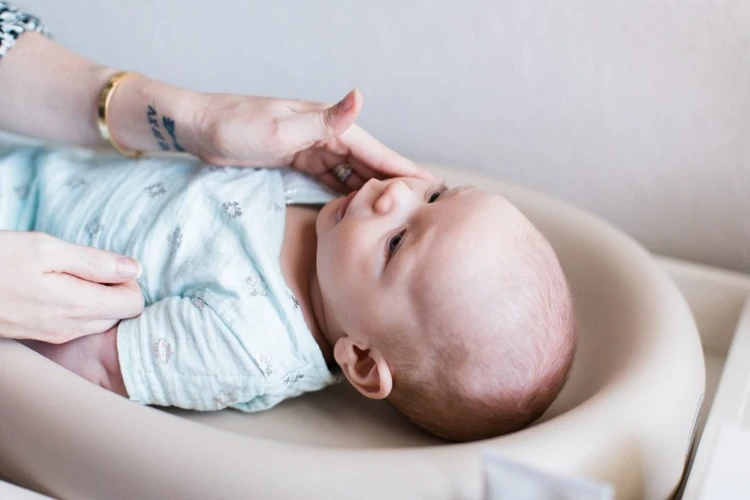
How often a baby poops varies considerably. Some breastfed babies have a bowel movement after almost every feed, while others may go several days between stools. Formula and the introduction of solid foods can also affect a baby’s usual pattern. The American Academy of Pediatrics and Mayo Clinic both emphasize that healthy stool patterns vary among babies.
For that reason, frequency alone does not tell you whether your baby is constipated. The consistency of the stool and how difficult it is to pass are often more useful clues.
Possible signs of constipation include:
- Hard, dry, pellet-like stools
- A stool that is larger or firmer than usual
- Pain or persistent crying while passing a hard stool
- A noticeably bloated or firm abdomen
- A significant change from your baby’s usual bowel pattern
- A small amount of blood on the outside of a hard stool, which may come from a tiny anal tear
Straining, grunting, drawing up the legs, and turning red can be normal in young babies—especially if the stool that eventually appears is soft. Babies are still learning to coordinate the muscles that increase abdominal pressure with those that allow the pelvic floor to relax. This temporary difficulty is sometimes called infant dyschezia. The American Academy of Pediatrics explains that straining alone is not necessarily a sign of constipation.
If you are unsure, particularly with a very young baby, ask a healthcare professional before trying to treat the problem.
Baby Massage for Constipation: Before You Begin
Choose a time when your baby is awake, calm, and comfortable. Avoid massaging immediately after a feed, when pressure on the tummy could cause discomfort or spit-up. You do not need a long session; a few relaxed minutes may be enough.
Place your baby on their back on a safe, stable surface in a warm room. Stay beside them and never leave them unattended on a raised surface.
Wash and warm your hands and remove anything that could scratch. Oil is optional; if you use it, choose a small amount of fragrance-free product made for babies and stop if the skin becomes irritated.
Your baby’s response matters more than completing a routine. Pause or stop if they:
- Cry in a way that suggests pain
- Stiffen, arch, or turn away
- Guard the tummy or resist your touch
- Become increasingly distressed
- Develop a belly that looks swollen or feels unusually hard or tender
Massage should feel soothing. Use broad, slow contact and light pressure; never knead deeply.

If massage is new to your family, our guide to when to start baby massage explains how to introduce gentle touch and respond to your baby’s cues.
How to Massage a Baby’s Tummy for Constipation
This sequence combines gentle tummy massage with simple leg movements. It may help your baby relax or become more comfortable, but every baby responds differently. Mayo Clinic includes gentle tummy massage, knees-to-chest, and bicycle-leg movements among measures parents can try.
1. Begin With a Calm, Warm Touch
Rest your warm palm lightly across your baby’s abdomen for several seconds and wait for their body to settle.
Keep your hand below the rib cage and above the diaper line. Avoid pressing directly on the ribs, hip bones, or a belly button that is sore or not fully healed.
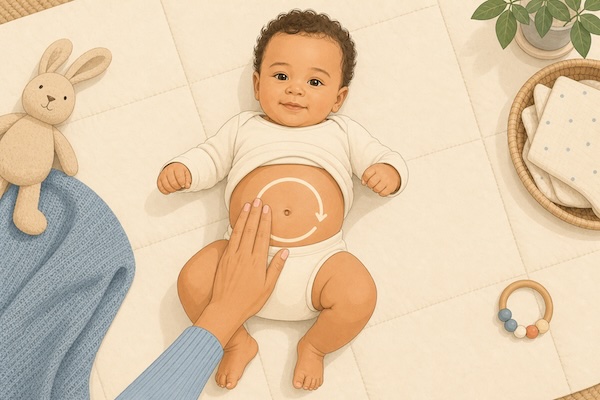
2. Make Gentle Clockwise Tummy Circles
Place your fingers or palm on the abdomen and slowly trace a broad clockwise circle around the belly button—the direction you would see on a clock facing you.
Complete several unhurried circles with light, even pressure. Your hand should move the skin gently without sinking deeply into the abdomen. If your baby remains relaxed, continue for about 30 to 60 seconds.
The aim is gentle comfort and movement—not forcing stool along.
3. Try Slow Bicycle Legs
Place your hands around your baby’s lower legs or ankles without squeezing. Move one knee toward the tummy as the other leg lengthens, then switch sides, creating a slow pedaling motion.
Continue for several cycles. Keep the movement comfortable and never force the hips or knees.
4. Bring Both Knees Toward the Tummy
Hold both lower legs and slowly bend your baby’s knees toward the abdomen, as though helping them into a small squat. Hold for a second or two, then release and allow the legs to lengthen.
Repeat a few times if your baby appears comfortable.
5. Finish When Your Baby Has Had Enough
End with a still hand on the tummy or a few gentle strokes. Stop if your baby becomes restless or uncomfortable.
A bowel movement may happen during the routine, later, or not at all. Massage is a supportive comfort measure rather than a reliable way to make a baby poop on demand.
How Often Can You Try Baby Tummy Massage?
You can try a short massage when your baby is calm and showing no warning signs. There is no medically established schedule that guarantees relief.
If constipation continues or you need to intervene frequently, contact your baby’s healthcare professional rather than increasing the frequency or pressure.
When Should You Not Massage a Baby’s Tummy?
Do not massage if the abdomen is swollen, hard, very tender, injured, or recovering from surgery. You should also pause if your baby has a fever, is vomiting, appears ill, or reacts as though touch is painful.
Ask a healthcare professional before trying abdominal massage if your baby:
- Was born prematurely
- Has a known gastrointestinal or abdominal condition
- Recently had surgery or a medical procedure
- Has an umbilical condition or a belly button that has not healed
- Is receiving treatment for another health problem
Do not use deep pressure, vigorous kneading, rectal stimulation, anal or perineal massage, or unproven reflexology pressure points to trigger a bowel movement. These are not necessary parts of a safe tummy-massage routine.
Other Gentle Ways to Help a Constipated Baby
A warm bath may help a tense baby relax. Normal supervised movement and bicycle legs can also be tried when your baby is comfortable.
Continue your baby’s usual breast milk or correctly prepared formula unless a healthcare professional tells you otherwise. Do not dilute formula, alter the powder-to-water ratio, or change formulas repeatedly without guidance.
For babies already eating solids, age-appropriate foods containing fiber—such as pears, prunes, peas, or beans—may help. Ask a clinician before offering water, fruit juice, supplements, or another constipation remedy.
Never give a baby mineral oil, an enema, a laxative, or a suppository unless a qualified healthcare professional has instructed you to do so. Mayo Clinic specifically advises against using mineral oil, stimulant laxatives, or enemas to treat infant constipation. If at-home measures are not helping, the next step is professional advice rather than a stronger DIY treatment.

If your baby also seems uncomfortable from trapped wind, our baby gas relief massage guide covers other gentle movements you can try.
When to Call Your Pediatrician
Contact a healthcare professional promptly if you think a newborn or young infant is constipated. You should also seek advice if symptoms continue for more than a few days, keep returning, or do not improve with the measures your clinician recommends.
Mayo Clinic advises contacting a healthcare professional right away when constipation occurs with abdominal swelling, vomiting, fever, feeding refusal, or unusual tiredness.
Seek urgent medical advice if constipation occurs with:
- Vomiting
- A swollen or unusually firm abdomen
- Fever
- Refusal to feed or difficulty feeding
- Unusual sleepiness, weakness, or reduced responsiveness
- Severe or persistent pain
- Fewer wet diapers, a dry mouth, or other possible signs of dehydration
- Blood in the stool, especially more than a small surface streak
- Poor growth or weight loss
Parents know their baby’s usual behavior. If something feels wrong, it is reasonable to seek help even when the symptoms do not fit neatly into a list.

Frequently Asked Questions
Does Tummy Massage Make a Baby Poop Immediately?
Not necessarily. Some babies may pass gas or stool during or after massage, while others will not. There is no reliable timeframe. Gentle massage may support relaxation and movement, but it should not be presented as an instant constipation cure.
How Long Should a Baby Tummy Massage Last?
A few minutes is usually plenty. Start with a very short session and follow your baby’s cues. Stop sooner if they cry, stiffen, turn away, or appear uncomfortable.
Can Massage Help a Newborn Poop?
Gentle touch may be comforting, but newborn bowel concerns deserve extra caution. Newborns can have different stool patterns depending on feeding and age, and constipation may occasionally require medical assessment. Contact your pediatrician or maternity-care professional if you believe a newborn is constipated.
What Is the Difference Between Constipation and Infant Dyschezia?
Constipation usually involves hard, dry, or painful stools. Infant dyschezia describes a baby straining or crying while learning to coordinate a bowel movement, followed by the passage of soft stool. A healthcare professional can help if you are uncertain which is happening.
Can Parents Try Bicycle Legs for Baby Constipation?
Slow bicycle legs are included in guidance from Mayo Clinic and the NHS. They are a gentle movement parents can try when a baby is comfortable. Never force the baby’s hips or knees

A Gentle Approach Is Best
Baby massage for constipation can be a calm, reassuring way to support a comfortable baby. Use light clockwise circles, bicycle legs, and knees-to-tummy movements, and let your baby’s cues guide the length of the routine.
Remember that massage cannot diagnose or cure constipation. If the stool is hard or painful, the problem persists, or your baby shows any warning signs, contact a qualified healthcare professional.
You can also explore our other infant massage and care guides for more gentle, parent-focused techniques.
📚 References
- American Academy of Pediatrics: How Can I Tell If My Baby Is Constipated?
- Mayo Clinic: Infant Constipation—How Is It Treated?
- MedlinePlus: Constipation in Infants and Children
- Nationwide Children’s Hospital: Constipation in Infants
- NHS: Constipation and Breastfeeding
How This Article Was Created
This guide was researched using publicly available information from the American Academy of Pediatrics, Mayo Clinic, MedlinePlus, the NHS, and established children’s hospitals. Sources were selected for their pediatric-health authority and checked for agreement on gentle massage, normal infant straining, constipation warning signs, and when caregivers should seek professional help. Claims not supported by these sources were excluded. Sources were last reviewed in July 2026.
⚠️ Medical disclaimer:
This article provides general educational information and summarizes guidance from established pediatric health organizations. It was not written or medically reviewed by a pediatric clinician and cannot determine why an individual baby is having difficulty passing stool. It is not a substitute for diagnosis or individualized medical advice. Contact your baby’s healthcare professional if you have concerns about their health or bowel movements.
About The Author