Knowing how to clean a massage table between clients is essential for massage therapists, spas, clinics and mobile massage businesses that want to maintain a clean, professional and client-ready treatment space.
Your massage table is one of the most important pieces of equipment in your business. It is also one of the first surfaces clients notice. Fresh linens, a clean face cradle and a table that feels dry, smooth and well cared for all help create confidence before the massage even begins. ✨
Good massage table hygiene is not just about appearance. It helps remove massage oil, sweat, body products, dust and everyday residue from client-contact surfaces. It also helps protect your table from cracking, peeling, staining and premature wear.
The goal is not to make exaggerated claims about creating a “sterile” environment. In most massage businesses, the more accurate goal is to keep your table clean, hygienic, disinfected where appropriate and ready for the next client.
In this guide, we’ll walk through how to clean a massage table between appointments, how to disinfect it safely, how to manage linens, what products to avoid and how to create a simple cleaning routine for your massage business.
Quick Answer: How Should Businesses Clean a Massage Table?
Massage businesses should clean a massage table after every client by removing used linens, wiping away oil and residue with a soft cloth and mild cleaner, then disinfecting client-contact surfaces with a product suitable for the table’s upholstery. The face cradle, armrests, bolsters and adjustment areas should also be cleaned regularly.
Always follow the disinfectant label’s contact time. Contact time means how long the surface needs to stay wet for the disinfectant to work properly. The CDC explains that disinfectants should remain wet on the surface for the full contact time listed in the product directions.
Allow the table to dry fully before replacing fresh linens. This helps prevent trapped moisture, odours and unnecessary wear on the upholstery. 🌿
Table of Contents
Why Massage Table Hygiene Matters for Businesses
Clients may not know every step of your cleaning process, but they can usually feel when a treatment room is well cared for. A fresh table, clean towels and a tidy setup help your business feel more professional from the moment someone walks in.
This matters whether you run a solo massage practice, a wellness studio, a spa, a chiropractic clinic, a physiotherapy clinic or a mobile massage service.
A clean massage table supports client comfort. No one wants to lie on a surface that feels oily, sticky, damp or poorly maintained. Even small signs of poor hygiene can make a client feel uneasy before their treatment begins.
Massage table cleaning also helps reduce unnecessary residue and contamination between clients. Massage involves close physical contact, shared surfaces and repeated use of linens, face cradle covers, bolsters and accessories.
It also protects your equipment. Massage oils, lotions, balms, sweat, hair products and cleaning residue can slowly affect vinyl or polyurethane upholstery. If these substances are left sitting on the surface, they may contribute to cracking, peeling, stickiness or fading over time.
Most importantly, good hygiene supports trust. Clean equipment is one part of creating a professional massage experience, along with communication, comfort and clear expectations. A table that looks and feels fresh tells clients they are in capable hands. 😊
Cleaning vs Disinfecting: What’s the Difference?
Before building your routine, it helps to understand the difference between cleaning and disinfecting.
Cleaning removes visible dirt, oil, sweat, lotion, dust and residue from the massage table surface. This is usually done with a soft cloth, warm water and a mild cleaner.
Disinfecting reduces germs on the surface. This step is usually done after cleaning, using a disinfectant that is suitable for your table’s material.
The order matters. If the table still has oil or lotion residue on it, disinfectant may not work as effectively. Cleaning prepares the surface so disinfecting can do its job properly.
For a business setting, both steps matter. A quick spray-and-wipe may feel efficient, but if the table is visibly oily or sticky, it needs to be cleaned first.
Think of it this way: cleaning removes the mess; disinfecting reduces germs. Both have a place in a professional massage table cleaning routine. 🧼
What You Need for a Professional Cleaning Routine
A professional massage table cleaning setup does not need to be complicated. It just needs to be consistent, easy to follow and safe for your equipment.
For most massage businesses, you’ll need:
✅ Soft microfibre cloths
✅ Mild soap or upholstery-safe cleaner
✅ Clean water
✅ A disinfectant suitable for your table material
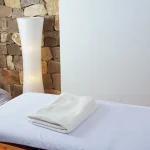
✅ Fresh sheets and towels
✅ Disposable or washable face cradle covers
✅ A used-linen basket or laundry bag
✅ A vacuum with a soft brush attachment for seams and dust
If you operate a mobile massage business, keep your cleaning supplies in a separate container or bag. Clean supplies and used linens should never be mixed together.
Always check your massage table manufacturer’s care instructions before using a cleaner or disinfectant. Different tables use different upholstery materials, and product guidance can vary. For example, many professional massage table brands recommend gentle cleaning methods and warn against over-saturating the upholstery.
That one step — checking the care instructions — can help prevent expensive damage. It is much easier to protect your table now than replace it early because the wrong cleaner caused cracking or stickiness. 👍
Step 1: Strip the Table After Every Client
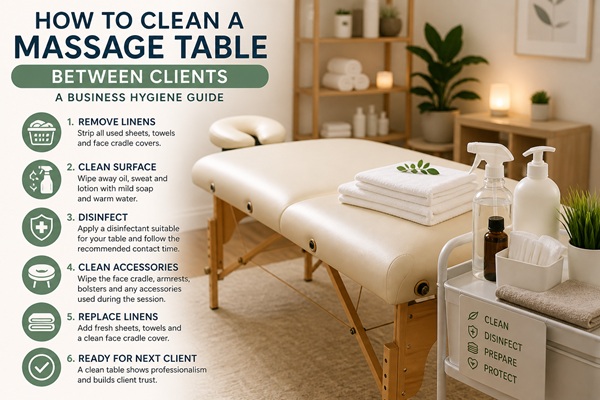
After each appointment, remove all used linens from the table. This includes sheets, towels, blankets, face cradle covers, pillowcases, bolster covers and any other fabric item that touched the client.
Do not shake used linens in the treatment room. This can spread hair, dust and skin particles into the air. Instead, remove them gently and place them directly into a designated laundry basket or linen bag.
If you use disposable face cradle covers, throw them away after each client. If you use washable covers, place them straight with the used laundry.
This step should happen every time, even if the client was only on the table briefly. Fresh linens are one of the clearest signs of a professional, hygienic massage business.
Fresh linens also help clients feel more comfortable, especially if they are unsure what to wear to a massage or how much clothing they should remove.
Step 2: Remove Oil, Sweat and Product Residue
Once the table is stripped, clean the surface before disinfecting it.
Use a soft cloth dampened with warm water and a small amount of mild soap or a table-safe upholstery cleaner. Wipe the main client-contact area first, then clean the sides, edges and any area where oil may have transferred around the linens.
Pay extra attention to the upper section of the table. The face, neck, shoulders and hair area often collects makeup, facial oil, sunscreen, hair products and massage oil.
Avoid spraying liquid directly onto the table, especially near seams. Massage tables have padding underneath the upholstery, and too much moisture can seep into small openings.
Instead, spray the cloth lightly or dip it into your cleaning solution and wring it out before wiping.
After cleaning, use a second cloth dampened with clean water to remove any soap or cleaner residue. Then dry the table with a clean towel.
This rinse-and-dry step is important. Leftover soap or cleaner can make the table feel sticky and may also interfere with disinfectant products. A table that feels smooth and dry is much more inviting for the next client. ✨
Step 3: Disinfect Client-Contact Surfaces
After the table is clean and dry, apply your disinfectant.
Choose a disinfectant that is suitable for the table’s upholstery and appropriate for your business setting. Read the product label carefully, especially the contact time. Contact time is the amount of time the surface needs to remain wet for the disinfectant to work as intended.
This is one of the most commonly missed steps. If you spray a disinfectant and wipe it away immediately, it may not have enough time to do its job properly.
Apply the disinfectant to the table surface and other client-contact areas. Allow it to sit for the recommended time. If the disinfectant label or table manufacturer recommends rinsing afterward, wipe the surface with a clean damp cloth and dry it thoroughly.
Do not replace fresh linens while the table is still wet. Moisture trapped under sheets can create odours and may affect the upholstery over time.
A dry, disinfected and freshly dressed table gives each client a better experience and keeps your workflow more professional. 🌿
Step 4: Clean the Face Cradle Thoroughly
The face cradle needs special attention because it comes into close contact with the client’s face, breath, hair, skin oils and makeup.
Remove the face cradle cushion if possible. Wipe the cushion with a mild cleaner and soft cloth, then rinse and dry. If the cushion is made from a wipeable material and your disinfectant is safe for it, disinfect it according to the product directions.
Clean the face cradle frame as well, including adjustment points and any plastic or metal areas that clients or therapists may touch.
If the cushion has seams, wipe carefully around them. Product residue can build up in small gaps, especially around the face hole and stitching.
The face cradle cover should be replaced after every client. This applies whether you use disposable covers or washable fabric covers.
A clean face cradle is one of the most important parts of client comfort. If this area smells like old oil, makeup or detergent, clients will notice quickly. It is a small detail that makes a big difference. 😊
Step 5: Clean Armrests, Bolsters and Accessories
Massage table hygiene includes more than the table top.
Armrests, bolsters, pillows, stools, side supports and adjustment areas can also collect sweat, oils, dust and product residue.
If an accessory touched the client or was used during the session, clean it before the next appointment. Wipe vinyl or polyurethane bolsters with a mild cleaner, rinse with a clean damp cloth, dry, and disinfect where appropriate.
If your bolsters have removable covers, wash them regularly. If you use the same bolster throughout the day, consider placing a clean towel or washable cover over it for each client.
Armrests and side supports should also be wiped regularly. These areas are easy to forget, but clients often rest their arms, hands or wrists on them during treatment.
A clean, organised setup is one of the simplest ways to give a good massage experience from the start.
Step 6: Manage Linens Properly
A clean massage table still needs clean linens. Poor linen management can undo an otherwise good cleaning routine.
Used linens should be kept separate from clean linens at all times. In a clinic or spa, this may mean using a lidded laundry hamper, sealed bag or clearly marked laundry area. For mobile therapists, a separate used-linen bag is essential.
Wash linens after each use. Use a suitable laundry detergent and make sure everything is fully dry before folding and storing. Damp towels, sheets and face cradle covers can develop a musty smell, especially in warm or humid environments.
Massage oils can be difficult to remove from fabric, so pre-treat oily towels if needed. Avoid overloading the washing machine, as this can stop linens from washing and rinsing properly.
Store clean linens in a closed cupboard, drawer, sealed tub or clean bag. This keeps them protected from dust, hair, moisture and treatment-room products.
Good linen management helps your treatment room feel fresh, calm and properly prepared for each appointment. 🧺
Massage Table Cleaning Checklist Between Clients
Before the next client arrives, make sure you have:
| ✅ Removed all used sheets, towels and face cradle covers |
| ✅ Placed used linens in a separate laundry bag or hamper |
| ✅ Wiped away oil, sweat and product residue |
| ✅ Cleaned the face cradle, armrests and client-contact areas |
| ✅ Disinfected surfaces according to product directions |
| ✅ Allowed the table to dry fully |
| ✅ Replaced all linens with fresh, clean items |
| ✅ Checked bolsters, pillows and accessories for residue |
This checklist is worth keeping near your treatment room storage area, especially if more than one therapist uses the same space. It keeps the routine simple, repeatable and easy to follow during a busy day. ✅
End-of-Day Cleaning Routine
At the end of the day, go beyond the basic between-client clean.
Wipe down the full table surface, including the sides, lower edges and frame. Clean the legs, adjustment knobs, headrest frame, arm supports and any handles used to move or fold the table.
Check underneath the table for dust, hair or dropped items. If you use a stool, trolley, oil bottle holder or side table, clean those as well.
Empty the used-linen basket, restock fresh linens and check your cleaning supplies. This small reset makes the next business day easier and keeps the treatment room feeling calm and organised.
If you use a portable massage table, allow it to dry fully before folding and storing it in a carry case. Folding a damp table can trap moisture and odours.
A clean end-of-day reset means you are not starting tomorrow already behind. It is one of those small business habits that makes the whole room feel more professional. ✨
Weekly Deep Cleaning and Maintenance
In addition to cleaning between clients, set aside time each week for deeper maintenance.
Check the upholstery for cracks, peeling, sticky areas or stains. Look closely at seams and edges, because these are common areas for wear.
Inspect the face cradle cushion, bolsters and armrests for damage. Vacuum seams and corners using a soft brush attachment. Wipe the table frame and legs thoroughly.
Clean any storage bags, table covers or protective accessories. This is also a good time to review your stock of linens, disposable covers, disinfectant, cloths and laundry supplies.
Running out of clean face cradle covers during a busy day is frustrating, but it is avoidable with a simple weekly stock check.
Weekly maintenance protects your table and keeps small issues from turning into bigger problems. It also helps your treatment room stay consistently client-ready, not just “clean enough.” 🌿
Mobile Massage Table Cleaning Tips
Mobile massage therapists have extra hygiene challenges. Your table may be set up in homes, offices, hotels, gyms or event spaces, and you may not always have ideal cleaning conditions.
Before each appointment, make sure your table is clean, dry and packed with fresh linens. Keep used linens in a separate bag after the treatment. Do not place used towels back into the same bag as clean supplies.
Carry a small cleaning kit with table-safe cleaner, disinfectant, cloths, disposable face cradle covers, spare linens and a rubbish bag. A compact setup makes it easier to clean properly without taking over the client’s space.
After each mobile appointment, wipe down the table before folding it away. If you cannot do a full clean immediately, do it as soon as you return to your car, clinic or home base.
Do not store the table long-term with oil, sweat or moisture on the surface.
For mobile businesses, presentation matters. A clean table, fresh linens and organised supplies help clients feel they are receiving a professional service, even outside a clinic setting. This is especially important when providing professional massage at home or in corporate wellness environments. 🚗
What Not to Use on a Massage Table
Using the wrong cleaning products can damage a massage table faster than regular use.
Avoid abrasive scrubbers, harsh solvents, acetone, undiluted bleach, strong degreasers, ammonia-based cleaners, citrus-based cleaners and products not recommended for upholstery.
Some care guides are quite specific about what to avoid, especially for PU and PVC surfaces. The safest approach is always to check the cleaning instructions for your specific table before using strong cleaners or disinfectants.
Do not soak the table. Too much moisture can seep into seams and padding. Also avoid leaving cleaning or disinfectant residue on the table if the product instructions say it should be rinsed off.
Be careful with alcohol-based products. Some may be suitable for certain surfaces, but frequent use can damage some types of vinyl or polyurethane.
If a cleaner has a strong smell, leaves a sticky film or changes the feel of the upholstery, stop using it until you can confirm it is safe.
Your cleaning routine should protect the table as well as the client. 🧼
How to Remove Oil and Stains from a Massage Table
Massage oil is one of the most common causes of table residue. The best approach is to remove oil as soon as possible, before it settles into the surface.
Use a mild soap solution and a soft cloth to gently wipe the oily area. Rinse with a clean damp cloth and dry thoroughly.
If the table still feels slippery, repeat the process rather than reaching for a harsh cleaner.
For makeup marks, sunscreen residue or darker stains, start gently. Test any cleaner on a small hidden area first. Scrubbing too hard can damage the surface and make the stain look worse.
Ink stains can be especially difficult. Avoid using strong solvents unless the manufacturer says they are safe for your table.
In many cases, it is better to protect the surface with a fitted cover than risk permanent upholstery damage.
If massage oil residue is a regular problem in your business, consider using an extra barrier sheet or washable protector during oil-heavy treatments. It is a simple change that can help extend the life of your table. ✨
Useful Supplies for Massage Table Cleaning
For a professional massage business, it helps to keep a simple cleaning kit ready between appointments.
This may include soft microfibre cloths, vinyl-safe cleaner, disposable face cradle covers, washable table protectors, laundry bags, fresh fitted sheets and a suitable disinfectant for your table material.
If you recommend products in this article, keep it practical and non-salesy. This should not feel like a product roundup. A small “useful supplies” section is enough.
The best affiliate opportunities would be:
✅ Disposable face cradle covers
✅ Massage table fitted sheets
✅ Washable table protectors
✅ Microfibre cleaning cloths
✅ Laundry bags for mobile therapists
✅ Vinyl-safe massage table cleaner
This is a good commercial-intent section because it helps business owners solve the problem without distracting from the main cleaning guide.
How to Protect Your Massage Table from Damage
Good massage table care is about prevention as much as cleaning.
Use fresh sheets, towels or protective covers for every client. This reduces direct contact between skin, oils and the table surface.
If you use a lot of oil in your treatments, consider using an extra barrier layer to protect the upholstery.
Keep the table out of direct sunlight where possible. UV exposure can fade and weaken some materials over time. If your treatment room gets strong sunlight, cover the table when it is not in use.
Do not leave oil bottles, hot stones, cleaning products or damp towels sitting directly on the table. These can leave marks, moisture rings or pressure spots.
If you fold and transport your table, make sure it is dry before packing it away. Store it in a clean, dry area away from excessive heat, moisture and sharp objects.
A well-cared-for massage table looks more professional and lasts longer, which is good for both client experience and business costs. 👍
Should You Keep a Written Cleaning Procedure?
For a massage business, a simple written cleaning procedure is a smart idea.
It does not need to be complicated. A one-page checklist can explain what needs to be done between clients, at the end of each day and during weekly maintenance.
This is especially useful if you have multiple therapists, contractors or staff using the same rooms. It helps everyone follow the same process and reduces the chance of missed steps.
A written cleaning procedure may include how to handle used linens, which cleaner to use, which disinfectant is approved for the table, how long the disinfectant should remain on the surface, where clean supplies are stored and who is responsible for end-of-day cleaning.
It also gives your business a more professional operating rhythm. When cleaning is part of the system, it is less likely to be rushed or forgotten.
A simple system is often better than a perfect system nobody follows. 😊
When Should You Replace or Repair a Massage Table?
Even with excellent care, massage tables do not last forever.
You may need to repair or replace your table if the upholstery is cracked, peeling, sticky, torn or difficult to clean. Damaged surfaces can trap oil, moisture and debris, making hygiene harder to maintain.
You should also check the structure of the table. If it wobbles, creaks loudly, feels unstable or no longer adjusts properly, it may no longer be suitable for professional use.
For client-facing businesses, the table should feel clean, stable and comfortable. If you would feel embarrassed for a new client to lie on it, that is a sign it may be time to upgrade.
Replacing a worn table is not just an equipment decision. It is also a client experience decision. 🌿
Final Thoughts
Cleaning a massage table between clients is one of the most important routines in a massage business. It protects client comfort, supports good hygiene, keeps your treatment space looking professional and helps extend the life of your equipment.
The best routine is simple: remove used linens, clean away oil and residue, disinfect client-contact surfaces according to product directions, allow the table to dry, and reset with fresh linens.
Avoid harsh chemicals, do not soak the upholstery, and always check that your cleaning products are safe for your specific table.
With a consistent process, your massage table can stay fresh, hygienic and client-ready all day. ✨
FAQs
How do you clean a massage table between clients?
Remove all used linens first, including sheets, towels and face cradle covers. Wipe the table with a soft cloth and mild cleaner to remove oil, sweat and residue. Then disinfect the client-contact surfaces with a product that is safe for your table upholstery. Allow the table to dry fully before adding fresh linens.
Should massage tables be disinfected after every client?
In a professional massage business, client-contact surfaces should generally be disinfected between clients after visible oil and residue are cleaned away. This includes the table surface, face cradle and any accessories used during the treatment. Always follow the disinfectant label instructions, including the recommended contact time.
Can you use disinfectant wipes on a massage table?
You can use disinfectant wipes if they are safe for your table’s upholstery material. Some wipes may be too harsh for vinyl or polyurethane if used frequently. Check your table manufacturer’s care instructions first, and wipe away residue afterward if recommended. The table should be dry before fresh linens are added.
Can I use alcohol wipes on a massage table?
Alcohol wipes may be suitable for some massage table surfaces, but they can damage certain vinyl or polyurethane upholstery if used too often. Always check the manufacturer’s care instructions before using alcohol-based products. If approved, follow the disinfectant label directions and allow the table to dry fully before replacing clean linens.
What is the best cleaner for massage table vinyl?
For routine cleaning, mild soap and warm water is often the safest option for massage table vinyl. You can also use a vinyl-safe upholstery cleaner if recommended by the manufacturer. Avoid abrasive cleaners, strong solvents, undiluted bleach and harsh degreasers, as these may damage the surface over time.
Why does my massage table feel sticky?
A sticky massage table may be caused by massage oil buildup, leftover cleaner residue, harsh disinfectants or aging upholstery. Clean the surface gently with mild soap and water, rinse with a clean damp cloth, and dry thoroughly. If the surface remains sticky, the vinyl may be breaking down and may need repair or replacement.
How often should a massage table be deep cleaned?
A massage table should be cleaned between every client and deep cleaned at least weekly in a professional setting. Weekly maintenance should include checking seams, cleaning the frame, inspecting the face cradle, wiping accessories and looking for signs of cracking, peeling or residue buildup. Busy clinics may need deeper cleaning more often.
How do mobile massage therapists clean their tables?
Mobile massage therapists should carry a separate cleaning kit with mild cleaner, disinfectant, cloths, spare linens and used-linen bags. After each appointment, remove used linens, wipe and disinfect the table, then allow it to dry before folding it away. Clean and used supplies should always be kept separate during transport.
📚References
- CDC: Cleaning and Disinfection for Community Facilities
- OSHA: Sterilization and Disinfection
- Pepperdine University: Cleaning a Massage Table
⚠️ Disclaimer:
This article is for informational purposes only and does not constitute medical advice. Always consult with a licensed healthcare provider or certified massage therapist before beginning any new treatment, especially if you have pre-existing health conditions or concerns.